Ambush marketing has become a strategy in an era where social media rewards wit over media spend, as some clever campaigns at the recent Fifa World Cup demonstrate, showing how creativity and earned media can compete with hundreds of millions of dollars in official sponsorship.
While Fifa's exclusive sponsorship rights rules are in place to protect sponsorship investment in the tournament of about $1.8bn, many brands that had not paid to be there created as much publicity as those that did.
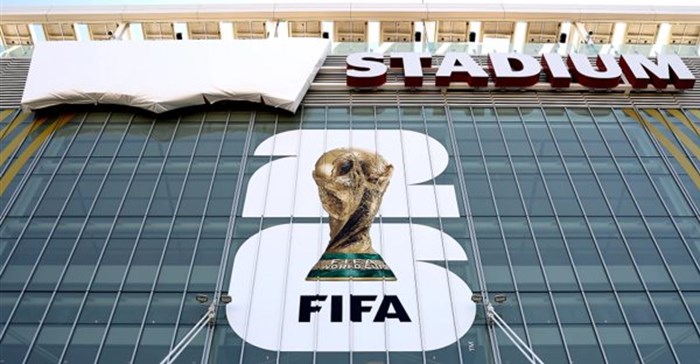
To protect sponsor rights and ensure only official Fifa partners dominate television and media coverage, Fifa makes every World Cup venue a ‘clean stadium’, that is, all non-official sponsor logos are removed, and players and officials are unable to display any rival branding.
However, non-official brands showed up using clever – and creative - tactics to overcome this.
Turning censorship into exposure
Perhaps the cleverest World Cup campaign this year belonged to Levi's.
Levi's had paid over $220m for the naming rights to Levi's Stadium in Santa Clara. Yet during the World Cup, Fifa renamed it simply San Francisco Bay Area Stadium and covered every Levi's logo with white tarpaulins. Instead of complaining, Levi's leaned into the joke.
- Changing their Instagram profile picture to the covered-up logo.
- Posting videos celebrating the "beautiful [redacted] stadium."
- Using the covered logo in stores and social media.
- Allowing the censorship itself to become the campaign.
The genius was psychological.
Even though the word Levi's disappeared, everyone immediately recognised the famous shape underneath the white covering.In branding terms,
Levi's demonstrated that its visual identity is so strong it no longer needs its name to be recognised.
Marketing commentators described it as turning “absence into presence”.

Rather than accept Fifa's the cover-up, Gillette produced social media content showing its logo apparently hidden beneath a layer of shaving foam (Image supplied)
Using the product as the cover up
Gillette Stadium in Foxborough faced the same restrictions. Inspired by the Levi’s activation, rather than simply accepting the ‘cover-up’, Gillette produced social media content showing its logo apparently hidden beneath a layer of shaving foam.
The visual immediately connected punters to the product.The message was subtle, humorous and perfectly on-brand, generating substantial discussion because it transformed Fifa's restriction into a product demonstration.
Unofficial stadium ketchup
In a similar position inside venues, Heinz ketchup branding was taped over because it wasn't an official sponsor. Instead of ignoring this, Heinz launched bottles with blacked-out labels, calling them Unofficial Stadium Ketchup
The black censorship strip became the design
Again, the joke worked because everyone recognises the Heinz bottle shape even without seeing the logo.It became another example of strong distinctive branding outperforming paid advertising.
The athletes join in
Even athletes became part of the story. Germany's Jamal Musiala was photographed with masking tape covering the Beats logo on his headphones before a match.
That image spread widely online and reminded everyone of Beats, even though Fifa had tried to hide it.
The marketing lesson
These campaigns succeeded because they exploited what marketers call the Streisand Effect.
Trying to hide something often makes people notice it even more . Instead of seeing Levi's logo people saw Why is Fifa hiding the Levi's logo? and as a result it became bigger than ordinary stadium signage ever would have been.
Not traditional ambush marketing
Classic ambush marketing usually tries to make consumers think a brand is an official sponsor.
Examples include:
- Sponsoring teams instead of tournaments
- Running football-themed advertising
- Using national colours without using official logos
Levi's, Gillette and Heinz did something different. They never pretended to be official partners.
Instead, they made fun of being excluded.
Some commentators have called it reverse ambush marketing or earned-media ambush, because Fifa itself inadvertently supplied the creative idea.
Christian Ungruhe 17 Jul 2026 The bigger takeaway for marketers
The 2026 World Cup highlighted a shift in sports marketing:
| Traditional sponsorship |
| Buy exposure | Create a story |
| Control messaging | Encourage sharing |
| Massive budget | Smart idea |
| Paid impressions | Earned conversation |
The official sponsors still received enormous value from global exposure. Still, brands like Levi's, Gillette and Heinz showed that a well-executed creative response to a restriction can become one of the tournament's defining marketing stories.
Their campaigns are case studies in how strong brand assets, humour and cultural timing can generate attention that rivals paid sponsorship.
Great examples of how not being a sponsor became the best marketing of the tournament. It is one of the most fascinating PR marketing stories of the 2026 Fifa World Cup.