The Novus Group’s FIFA World Cup 2026 Statistical Media Coverage Report shows how the national team and individual players shaped media attention, while off-field controversy added to the media cycle.

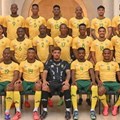
Bafana Bafana drove South Africa’s World Cup media coverage before daily volumes fell 44.9% (Source image @ NovaNews
Nova News)
It shows that tournament scale alone did not determine attention. National relevance shaped local coverage, while individual players and off-field issues generated their own media momentum.
The 2026 tournament brought together 48 teams for 104 matches across 16 host cities in Canada, Mexico, and the US, creating an expansive media cycle around results, personalities, supporters, logistics, and controversy.
In South Africa, Bafana Bafana’s progress was the clearest driver of interest in the Fifa World Cup. Average daily traditional media coverage fell by 44.9% after their Round-of-32 defeat to Canada on 28 June, even though the tournament continued for another three weeks.
A Fifa World Cup may be global in scale, but the forces that sustain media attention remain intensely local.
Traditional media
The report, which tracked coverage from 11 June to 19 July, recorded 69,729 traditional media items globally, an advertising value equivalent of R2.54bn, and a potential reach of more than 85.5 billion.
South Africa produced 11,576 items, representing 16.6% of the global total and placing it third behind the US and India.
Online publishing accounted for 97.4% of monitored global coverage. South Africa recorded a broader media mix, with online contributing 84.2%, print 10.8%, and broadcast 5.1%.
The stronger representation of print and broadcast than in the global sample suggests that traditional media continued to play an important role in turning Bafana Bafana’s campaign into a national story.
Coverage tied to Bafana Bafana’s progress
“The tournament had strong global appeal, but South African coverage was closely tied to Bafana Bafana’s progress,” says Joe Hamman, director at Novus Group.
“Interest rose through the group stage and around the knockout match against Canada.
“Once the national team was out, the volume dropped substantially, even though the tournament continued for another three weeks.”
Other points of interest
The report found other points of interest that kept the media appeal going.
- Individual players
Match results and team performances accounted for 42.6% of global coverage. Attention built towards the Argentina v Spain final on 19 July, while individual players drew coverage independently of their teams.
Lionel Messi led player mentions with 10,417 items, followed by Kylian Mbappé with 9,559. Cristiano Ronaldo ranked below both on volume but achieved the highest potential audience reach at 620 million, compared with Messi’s 590 million.
The difference shows why mention volume and potential reach cannot be treated as interchangeable measures.
- Social media stories
The report’s finding on player-led coverage was reflected in one of the tournament’s most striking social media stories.
Cabo Verde goalkeeper Vozinha became an overnight sensation after making seven saves in his team’s goalless draw against Spain, with his Instagram following rising from about 50,000 to millions within 24 hours.
- Off-field controversy
Off-field controversy also contributed to the media cycle.
Fifa president Gianni Infantino faced questions over visa handling and defended the tournament’s ticket pricing amid concerns about affordability and access. Football remained the primary driver of coverage, while these issues kept Fifa’s organisation and commercial model in public view.
“Fixtures are only one part of what sustains attention around a major tournament.
“National identity shapes local interest, while individual personalities can build their own media momentum.
“Off-field issues also become part of how the tournament is understood and discussed,” says Hamman.
Headline reach figures
The report’s social media analysis shows why headline reach figures require care.
The 14.3 billion cumulative social reach represents audience potential based largely on account follower numbers, rather than verified impressions or engagement. Just three large accounts contributed about 56% of tracked reach, meaning account size strongly influenced the topline result.
For brands and rights holders, tournament performance cannot be understood through one figure.
Coverage volume
Coverage volume becomes more useful when viewed alongside local relevance, player appeal, the influence of major amplifiers, and sentiment.
The World Cup generated enormous global attention, but the South African findings show that local relevance determined how strongly that interest was sustained.
Bafana Bafana gave the tournament its domestic meaning, and their exit changed the media picture almost immediately.