Brands are investing more heavily than ever in social and creator marketing, but new Warc research warns that relying on these channels alone won't drive sustainable growth.
The Pace Principle 2.0 finds that social and creator marketing – for all its speed and cultural relevance – hits three structural ceilings that no amount of additional content or paid media can break through alone.
The findings build on Warc's landmark effectiveness study The Pace Principle, released last year, which found the most effective brands in Asia run at twin paces simultaneously – a performance-driven sprint and long-distance brand-building. This second edition applies that lens to the social-first era, at a moment when creator and social investment is accelerating faster than marketers' confidence in what it actually delivers.
Whilst the evidence draws on evidence from Asia, one of the world's most socially engaged regions, the findings have implications for any global marketer looking to make social and creator strategies work at scale.
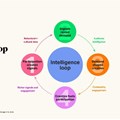
Rica Facundo, managing editor, Warc APAC, says: “Since publishing the Pace Principle last year, what has become clear is that with investment pouring into social and creator marketing, marketers risk getting trapped into a social sprint loop whereby brands are producing more content for virality, optimising for the algorithm rather than enduring memory and customer resonance. Virality is not a strategy, it's an unpredictable outcome for growth.
“The loop challenge doesn’t require a new playbook but reinterpreting proven principles through a new media ecosystem. If there's one idea to take from this report, it's understanding the three ceilings of social. That's what separates a social sprint from sustained growth.”
Key findings outlined in The Pace Principle 2.0 are:
Social strategy is not the same as social media
Social is widely understood as a media choice: which platforms, formats, and creators. This is where many strategies go wrong.
Social is not a media channel – it's a creative strategy designed to get people talking, sharing, and interacting with a brand. The data shows that the most effective campaigns rely on social media platforms less than average. Rather, an interaction may begin on a platform, but the idea travels across creators, PR, search, and broader cultural conversation.
However, there's no guarantee an audience will share, remix, or carry an idea forward. While social can expose brands to new buyers by activating niche communities, replicating that success reliably, across a fragmented media landscape, and at scale is a challenge and very hard to do.
Two strategies, one goal: brands need both social and emotional marketing to drive growth
Sustainable growth requires combining different growth mechanisms, each contributing what it does best.
The report identifies two distinct creative strategies that complement each other. Both use emotion and both build brand equity, but they target different audiences, through different routes, at different speeds.
Social strategy provokes participation – getting people talking, sharing, and interacting with a brand. Targeted social campaigns are 2.4x more effective than targeted emotional campaigns.
Emotional strategy builds lasting memory and brand predisposition across the whole category. Sharing is a bonus, not the objective. Broad emotional campaigns are 2.1x more effective than broad social campaigns, specifically delivering more than double on short-term effects and nearly 4x on the long-term.
Each strategy is built for a different objective, but used together, they build brand equity at two speeds at once. Correct alignment of target social market and creative strategy can improve campaign effectiveness by up to 70%.
Breaking through the three ceilings that limit social growth
The shift marketers need to make is summed up by the social ceiling framework, which will help brands move away from optimising only for the algorithm.
The research highlights three ceilings, each representing a different constraint, and each requiring a different response. The brands that consistently break through these ceilings will not only create better content, but will build better ecosystems where creators are embedded operators:
The platform ceiling: Where reach concentrates within algorithmic feeds, content decays fast, and growth stalls when paid media stops. To break the platform ceiling, marketers should create ideas that can travel beyond the platform and be reinforced across an ecosystem of touchpoints.
The cultural ceiling: When a campaign is centred around cultural moments, that eventually die down and the conversation stops. Breaking through means building around deeper cultural forces that outlast any single trend.
The self-sustaining ceiling: Where creators carry the idea forward without brand prompting. This ceiling is the hardest to reach and the most durable but is reserved for brands that have built and earned credibility over time, not in a single moment.
Methodology of the research
The research for the report is based on in-depth analysis of 210 advertising case studies in the Warc database sourced from across Southeast Asia, Greater China, and India, as well as an accompanying questionnaire submitted by the authors of the case studies.