








Related




Top stories


LegalAI, fake news, and free elections: How SA is tackling digital disinformation
Vanessa Jacklin-Levin 8 hours
More news


The most striking finding is the dominance of self-collection. Nearly half of all shop owners — 49% — collect all their stock themselves. At supplier-relationship level the picture is even more pronounced: 78% of named supplier relationships are collection-led, with only 18% involving any form of delivery. This is not preference — it is default. The collection trip to a cash-and-carry costs time, transport money, and the physical risk of carrying cash. It persists not because it is good, but because a viable alternative has not yet arrived.
The majority of shops replenish on weekly or fortnightly cycles, with top-up trips for fast-moving lines in between. Peak trading is equally predictable: Saturday is the busiest day of the week, followed by Friday. Month-end, pay days, SASSA grant payment days, and school days each generate consistent, repeatable demand surges. This is a calendar-driven channel.
57% of shop owners said they would use delivery more if it were reliable and affordable. A further 18% said maybe. Only 25% declined outright — and their resistance is almost never about price. It is about trust. The word 'reliable' carries enormous weight: it means the right products, undamaged, at the agreed price, within a predictable window, with a clear returns process when things go wrong.
Five categories consistently dominated what spaza owners stock and replenish most frequently: beverages, snacks and confectionery, everyday staples, cleaning products, and personal care items. Compliant tobacco features as a regular line for shops that carry it. These are high-frequency, functional categories embedded in the daily lives of township households — and the most likely to generate repeat, predictable demand. A shop that runs out of cold drinks or washing powder on a Thursday cannot wait until next week's collection trip. That urgency is the commercial opening.
But the way these products are sold shapes how they must be bought. Spaza customers purchase in very small quantities — single units, individual sachets, one or two items at a time. Full-case minimum order quantities are incompatible with the storage capacity and cash flow of the typical spaza shop. The product offer for this channel must reflect that reality: smaller order sizes, the ability to mix across categories in a single order, and formats that go straight onto the shelf without additional handling.
Cash remains the dominant payment method for stock purchasing — and understanding why matters. For a spaza owner managing thin margins and variable income, cash is a rational choice. It is immediate, visible, and carries no counterparty risk. When you hand over notes and receive goods, the transaction is complete — no dispute about whether a payment cleared, no platform fee, no failed EFT on a busy Saturday morning.
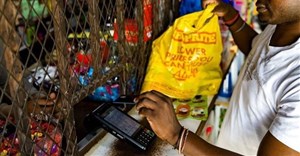
And yet digital payment acceptance is already present in the channel. Many owners accept digital payments from their own customers — via QR codes, mobile apps, or tap-to-pay — while buying their own stock exclusively in cash. The infrastructure and the familiarity are already there. What is missing is trust: confidence that a digital payment to a supplier will result in the right stock arriving reliably and on time. The transition from cash to digital is not a technology problem — it is a trust problem. Receipts, proof of delivery, and consistent execution are the preconditions for any shift toward platform-linked payments.
"The transition to digital payments in the spaza channel is not a technology problem. It is a trust problem — and trust is built one reliable delivery at a time."
The demand is there. The product categories are clear. The payment pathway, while requiring patience, is navigable. The willingness to engage with delivery — conditional on trust and reliability — is real and measurable.
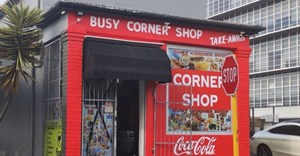
Channel structure: 78% of supplier relationships are collection-led; only 18% involve delivery. 49% of shop owners collect all their own stock. The channel is collect-heavy by default, not by preference.
Buying behaviour: Replenishment is planned and routine — weekly or fortnightly cycles, with fast-mover top-ups in between. Demand peaks consistently around Saturday, Friday, month-end, SASSA grant payment days, and school days.
Delivery appetite: 57% would use delivery more if reliable and affordable. 18% said maybe. 25% declined — primarily on the basis of trust, not cost.
Product categories: The five most consistently stocked categories are beverages, snacks and confectionery, everyday staples, cleaning products, and personal care items. Compliant tobacco is a regular line for applicable shops.
Order size and format: Full-case quantities are incompatible with most spaza shops' storage space and cash flow. Smaller order sizes, mixed-category ordering, and shelf-ready formats are the practical baseline for channel adoption.
Payment methods: Cash dominates buying behaviour. Digital payment acceptance from customers is already present. The barrier to digital supplier payments is trust — not technology. Receipts, proof of delivery, and reliable execution are the prerequisites for any shift toward platform-linked settlement.
Trust: Trust emerged as the single most important variable across every dimension of the research. It is the primary reason 25% declined delivery, the qualifier on 57% saying yes, and the precondition for digital payment adoption. It is earned through consistency — not marketing.
This article draws on primary field research conducted by AlchemistC in July 2026, commissioned by On the Dot. The research comprised of 51 face-to-face interviews from spaza shop owners across Western Cape township communities, combining quantitative survey data with qualitative open-text responses. Analysis was conducted at both respondent level and individual supplier-relationship level.
For more information
To find out more about this research please contact:
az.oc.ctsimehcla@enelad or az.oc.todehtno@zeerPuD.seuqcaJ