South African hip-hop has never been afraid of reinvention. From the sounds we grew up with to the ways artists have found new ways to tell their stories, the culture has always evolved by challenging what came before it.

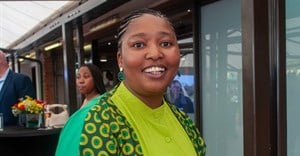
Tyson Sybateli. Image supplied
But I think we need to ask ourselves an uncomfortable question: are we still giving ourselves enough room to experiment?
When metrics start driving the music
I am not talking about experimentation for the sake of being different. I mean creating without constantly asking whether something will fit neatly into a playlist, perform well within the first few days of release, or give an audience exactly what it already expects.
Music exists in an environment where almost everything is measured. Streams, skips, playlist placements, engagement, followers and first-week numbers have become part of the conversation around an artist's work.
Those things matter, particularly when music is also a business. But when metrics become the starting point for every creative decision, there is a danger that we begin making music for the system rather than making music that challenges us.
An album can be more than a collection of songs
For me, an album should be more than a collection of songs released at the same time. It can be a world. It can have different entry points. It can reward curiosity.
That thinking shaped my latest album. The project exists differently depending on how you experience it. The digital version contains 14 tracks, while the physical CD has 18.
There is also a song called Advertisement that takes a different form depending on the digital platform you use. Spotify, Apple Music and YouTube each give the listener a different song.
That decision was deliberate. I wanted to play with the idea that the platform itself could become part of the creative experience.
Hip-Hop was built on breaking rules
We often think of streaming services simply as places where music lives. But what if the way we access music could influence the way we experience it?
It is a small example of a much bigger question: what else could we do if we stopped treating the traditional album format as a set of rules?
Hip-hop was built on that kind of questioning. Sampling transformed existing sounds into something new. DJs changed the way people experienced music. Mixtapes created alternative routes for artists to build audiences.
Artists have constantly borrowed, reinterpreted and broken conventions. Experimentation is not foreign to hip-hop. It is part of its DNA.
Creativity vs. the pressure to play it safe
Yet today's music environment can sometimes make experimentation feel like a risk that needs to be justified.
There is an understandable pressure on artists to be consistent. Give the audience what they know you for. Make the content easily digestible. Release the single. Chase the playlist. Follow the trend. Replicate what is already working.
But there is a difference between understanding your audience and allowing your audience to determine the limits of your creativity.
Making space for the unknown
If South African hip-hop is going to continue evolving, I believe we need more artists willing to sit in that uncomfortable space where the outcome is uncertain.
That might mean making a song that does not sound like anything else on the radio. It might mean creating an album that asks listeners to engage with it differently. It might mean experimenting with visuals, physical formats, live performances or the relationship between music and technology.
Some experiments will work. Others will not. That is part of the process.
We cannot ask a culture to evolve while expecting every artist to play it safe.
Creating the next formula
South African hip-hop has something valuable because it has never been one-dimensional. It has absorbed different sounds, languages, experiences and perspectives and turned them into something distinctly its own.
Protecting that creative spirit does not mean rejecting the commercial realities of music. It means refusing to let those realities become the only measure of what is worth creating.
My album is one small attempt to explore that idea.
For me, the question is not whether an artist should follow a particular formula. The question is whether we are still willing to create new formulas.
Because the next important moment in South African hip-hop might not come from making the perfect version of what already exists. It might come from someone being brave enough to make something we've never heard before.