Early adoption and continued investment in technology have supported Algoa FM’s growth over the past 40 years, to become the leading commercial media house in its footprint, from the Garden Route to the Wild Coast, and inland through the Karoo.
“There are many firsts in our history. Algoa FM has always had an appetite for early adoption, new technology, and innovation,” says managing director Alfie Jay, who has been with the station since soon after its inception.
Algoa FM was the first SABC radio station to be privatised – on October 7, 1996, when Umoya Communications won the bid to buy the business.
This was a decade after the first Algoa broadcast on January 1, 1986, from the SABC studios in what is now the Nelson Mandela Bay metro.
In January 1991 it was one of the first music stations in the country to broadcast in stereo and changed its name to Algoa Stereo for a year to mark the change.
Another innovation was a transmitter split in April 1992, to provide a more local feel to what is now the Buffalo City metro, then known as BRFM.
Today, Algoa FM hosts two afternoon transmitter splits, serving Buffalo City and surrounds as well as the Garden Route.
In the same year, Algoa FM became only the third station on the continent after the then Radio 5 and Highveld Stereo, to broadcast from a computer-driven digital play-out system.
On June 1, 1997, Algoa FM became the first radio station outside of the United States to switch to a fully digital playout system on a Windows platform.
Jay, who was the technical manager at the time, remembers that the station was one of the early movers to update their systems to avoid the predicted Y2K computer meltdown.
“It was also the largest installation RCS had ever implemented in respect of hard drive space – a whopping 27 GIGS for information storage and audio file-serving.
“A month later, Algoa became the first radio station outside of Canada to adopt a dedicated digital solution for news.
“Burli was one of the first systems to harness the capabilities of email-based reporting, word processing, digital audio recording, editing, and teleprompter services in one package – and it served us well for 28 years,” says Jay.
The station was an early adopter of the Internet and then social media, launching its first website in June 1998.
“Today, we have the technology needed to connect with our listeners on air, online, and on the ground,” says Jay.
In 2000, Algoa was the first business outside Gauteng to implement an optic fibre, ring feed data distribution system.
“It meant that if Telkom’s exchange in Central Port Elizabeth went down, our services would seamlessly remain live via the Summerstrand Exchange,” he says.
New technology also helped Algoa FM reduce its reliance on the state telco.
“The one piece of tech in which we should probably be most proud is Viprinet, with Algoa being an early adopter for outside broadcasts.
”We were one of the first radio businesses in the world, and the first on the African Continent to use the technology to wirelessly connect our remote outside broadcast vehicles with the studio,” he says.
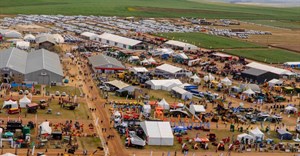
It has enabled Algoa FM to move out of the studio and become part of regional events and to help clients celebrate important occasions by providing 99,9% uptime, reduced and secure, high-speed data transmission both to and from remote locations.
Implemented a decade ago, the system freed Algoa from dependence on the Telkom network.
“It has saved us an estimated R2m in hard costs over the period and significantly minimised our risk of lost opportunity.
“Without the implementation of this technology at Algoa FM, we would have lost around 30% of the revenue earned on outside broadcasts due to the non-availability of Telco services in certain areas, and the lead time required between an inquiry being made and the date of broadcast,” says Jay.
During the Covid-19 lockdown, Algoa FM presenters Charlie T, and KayCee Rossouw, broadcast from their homes using this technology.
More recently, and when built in 2019, Algoa FM headquarters was the first office building in the NMB metro to have an EV charging station.
In a first for the metro, it has photo-voltaic panels shading the north-facing windows from the sun, in addition to PV panels on the roof, and its parking area.
In another first to protect all the sensitive digital equipment crammed into the building, all power is fed through a pair of high-tech inverters that smooth out the spikes and troughs that are typical of the NMB power supply, as well as that of the generator.
The inverter batteries can keep the building running for 20 minutes, which provides time for the generator to start and stabilise, and the station is about to invest in more batteries to improve returns through increased energy self-consumption. The building is one of the greenest in the metro, with lights connected to motion detectors throughout.
All the toilets are off-grid, fed by rainwater tanks and condensation from the air conditioners.
The parking area is lit by four intelligent solar-powered lights that dim at night to minimise light pollution in the neighbouring Settlers Valley which has a population of owls and other night creatures.
Instead of fences, intelligent cameras guard the perimeter by detecting movement and alerting a private security company of incursions.
Security is also a priority, with one of the metro’s first licence plate recognition systems controlling the reserved parking in the building. The gates are opened automatically when the camera detects an approved number plate.
All doors to the office areas and studios are controlled by fingerprint-activated locks. “Over the years, our investments in technology have been based on strategic outcomes aligned to our purpose of switching people on by providing an enriching experience. “This approach has enabled us to continually engage in informative and entertaining content; maintain a culture of service excellence; foster an environment conducive to initiative, creative expression, and personal responsibility – and to nurture a fervent commitment to the various communities we serve,” says Jay.