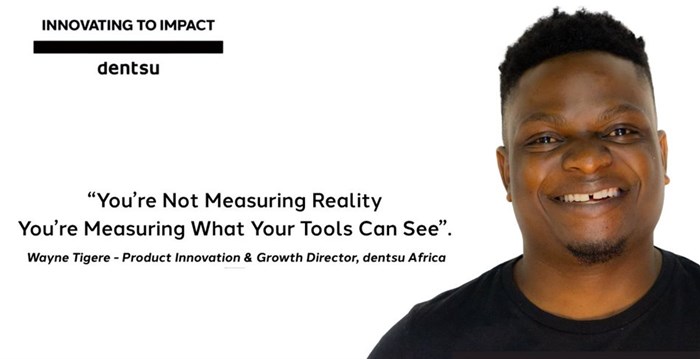
Every week, budget decisions are made off attribution outputs that do not reflect how people purchase. The dashboard says: Search drove the conversion.
Reality looks different:
A WhatsApp conversation
A friend’s recommendation
An in-store interaction
A promotion seen days earlier
A late night mobile purchase.
We credit the last click. We ignore everything that created the decision.
This is not just a data problem. It is a model failure.
Attribution frameworks were built for:
- Always on connectivity
- Stable identity across devices
- Linear, browser led journeys.
That is not this market.
Across Africa:
- Mobile is the primary gateway to the internet.
- Devices are shared and identities are fluid.
- Commerce happens in chat, in store, and in community.
- Journeys are fragmented, delayed, and nonlinear.
Yet we are forcing that reality into a model designed for a completely different system.
At dentsu Africa, we see this gap consistently across the clients we work with.
The issue is not access to data. It is the lens used to interpret it.
What the industry does not want to admit
Last click attribution does one thing extremely well: It makes performance marketing look more effective than it is.
Because it:
- Over rewards the final interaction
- Under values brand and demand creation
- Ignores offline and informal influence.
- Converts complexity into false certainty.
The result is predictable: Investment flows to demand capture. Demand creation gets cut. Growth does not stop immediately. It erodes over time.
Where it breaks in this market
This is not a marginal issue. It is structural.
Identity is fragmented
One person appears as multiple users across devices, SIM cards, and sessions.
WhatsApp is invisible
One of the most important commercial channels on the continent barely exists in attribution systems.
Offline still closes
Retail, human interaction, and community influence remain decisive in the final decision.
Journeys are delayed
Consumers move in and out of consideration over time, often beyond standard attribution windows.
Platforms do multiple jobs
TikTok, Meta, YouTube are not just performance channels.
They drive awareness, consideration, and conversion simultaneously.
Last click cannot hold this level of complexity.
The result: Biased decisions at scale
When measurement is incomplete, decision making is distorted:
- Lower funnel channels are overvalued.
- Upper funnel investment is undercut.
- ROI appears stronger than it is.
- Long term brand equity deteriorates.
A sizeable portion of business impact comes from channels that are either partially measured or not measured at all. In this market, that gap is not small. It is material.
What better looks like
This is not theoretical. It is already being built. At dentsu Africa, we are actively moving clients beyond platform reported performance towards integrated measurement systems designed for this market reality.
That means:
Accept incomplete truth
We quantify what can be measured and explicitly model what cannot.
Reintroduce marketing mix modelling
Incorporating offline media, pricing, distribution, and economic factors that attribution ignores.
Prioritise incrementality
Shifting the question from “who gets the credit” to “what actually changed behaviour”.
Build from first party reality
Designing data ecosystems that reflect real customers, not just tracked impressions.
This is not about replacing attribution. It is about putting it in its place.
The real cost of getting this wrong
This is not an academic debate. It shows up in:
- Misallocated media investment
- Underinvestment in brand building
- Overstated performance returns
- Slower, less efficient growth
Or more simply: You are optimising what is visible, not what is effective.
The Opportunity
Africa is not behind in measurement. It is exposing the flaws in the global model faster than most. Because here, the disconnect is obvious.
The brands that will win are not the ones with the cleanest dashboards. They are the ones that understand: What their measurement cannot see.
If your current measurement framework cannot account for:
- WhatsApp and messaging led commerce.
- Offline influence and retail behaviour
- Fragmented identity across devices
- Delayed and nonlinear decision making
Then it is not fit for this market. And it is already costing you growth.
At dentsu Africa, we are building measurement systems designed for how this continent works. Not how global frameworks assume it works.
Because this is not about better reporting. It is about better decisions. Stop optimising for the last click. Start investing in the real journey.