The global data-centre boom is set to drive far greater demand for base metals than previously thought, according to new research from Wood Mackenzie.
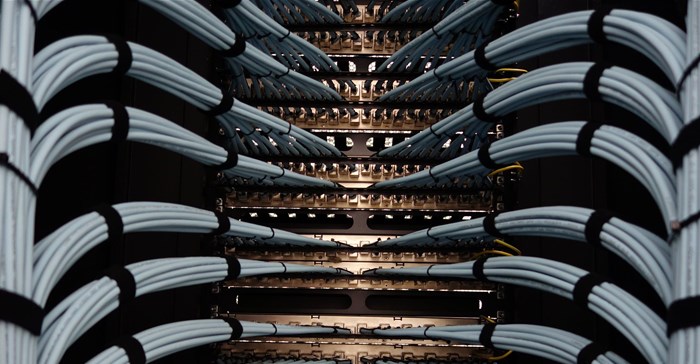
Source: Pexels.
While most assessments focus on servers and cooling systems inside facilities, the report finds that grid upgrades, transmission networks and on-site power infrastructure account for the bulk of metals consumption. When these factors are included, total aluminium and copper demand is estimated to be three to four times higher than commonly assumed.
“Most assessments of data-centre metals demand stop at the server room door,” said Shashank Sriram, senior research analyst, aluminium markets at Wood Mackenzie. That captures the smallest part of the picture.
"The infrastructure required to keep a modern data centre running, redundant power systems, on-site generation, transmission reinforcement, has a metals footprint that dwarfs what is happening inside the facility. At the system level, we are looking at three to four times the volume implied within the asset. For investors and grid planners, that is a material difference.”
Key findings at a glance:
- Internal aluminium demand peaks at 0.6 to 0.9 million tonnes annually, declining from the late 2030s
- Cooling represents approximately 55% of internal aluminium demand; racking and enclosures approximately 25%
- Internal demand grows at approximately 8 to 10% CAGR to the early 2030s, then falls at approximately 2 to 3% per annum
- Annual data-centre power capacity additions are projected to peak at approximately 30 to 33GW in the early 2030s
- Asia-Pacific will exceed 50% of global additions at peak; North America leads early deployment
What is happening inside the facility
Inside the data centre, aluminium demand is concentrated in cooling systems, at approximately 55% of internal use, and racking and enclosures, at approximately 25%. Copper anchors performance at high-density nodes, driven by power density and system complexity rather than structure.
Both metals are set to grow at approximately 8 to 10% per year into the early 2030s, before plateauing and declining at approximately 2 to 3% per annum as efficiency gains and AI-driven design optimisation take hold. Total aluminium demand within the asset is estimated to peak at 0.6 to 0.9 million tonnes annually before trending lower toward the late 2030s.
In short, the internal demand profile is front-loaded and bounded, even as underlying compute demand continues to rise.
Where demand is actually being generated
The first structural shift occurs at the facility boundary. As grid connections slow and local power capacity tightens, operators are building power systems into the facility itself. On-site generation now spans solar and wind with storage, gas engines and turbines, solid oxide fuel cells, and emerging small modular reactor concepts.
None of this scales with compute load. It sits alongside it, engineered to guarantee uptime regardless of what the grid does. Wood Mackenzie estimates that this layer alone effectively doubles the metals demand implied within the asset, with aluminium expanding across busways, structural housings, and distribution systems, and copper scaling across high-load interconnections and grounding infrastructure.
The second shift occurs at the grid. Annual data centre-driven power capacity additions are projected to rise from approximately 15 to 20 gigawatts today to a peak of approximately 30 to 33 gigawatts in the early 2030s, stabilising at structurally higher levels thereafter.
Chris Takudzwa Muronzi and Colleen Goko 15 Jun 2026 Asia-Pacific will account for more than half of global additions during the peak phase. North America leads early deployment. These are not incremental grid connections. They are network reinforcement programmes responding to load profiles that existing infrastructure was not designed to absorb.
At this stage, metals demand is no longer driven by the data centre. It is driven by the power system required to sustain it. Aluminium dominates here, scaling across overhead transmission, conductors, and utility-scale generation frameworks.
Copper scales across substations, underground connections, and generation-side electrical systems. The split between the two metals is not a function of price. It is determined by the physical limits of each application. Physics defines outcomes. Price influences the boundaries.
When all three layers are aggregated, total system-level metals consumption reaches an estimated three to four times the volume implied within the asset. The result, the report concludes, is not substitution between aluminium and copper, but co-dependent expansion across the base metals complex.