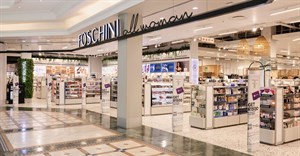
The Foschini Group (TFG) is set to accelerate the rationalisation of its store network after a largely flat start to its 2027 financial year, with the retailer planning to close a further 180 stores over the next three financial years as customers increasingly shift towards online shopping.

Reuters/Siphiwe Sibeko
In a trading update for the 21 weeks ended 22 August 2026, TFG reported group sales growth of just 0.2% to R23bn, or 2% on a constant-currency basis.
The performance was supported by its African operations, while weaker trading in Australia continued to weigh on the overall result.
The retailer closed 85 stores during the period after identifying them as no longer economically viable, while opening 25 new stores.
TFG expects approximately 80 additional stores to fall within its closure parameters during the current financial year, followed by about 100 further closures across the subsequent two years.
This means the group could ultimately exit around 280 stores over the three-year period when the 85 already closed are included in the broader rationalisation programme.
The strategy is less a retreat from physical retail than an attempt to reshape TFG's store estate around locations and formats that can generate sustainable returns.
Online growth changes the equation
The clearest growth engine in the latest trading update was digital.
TFG's group online sales increased 15.3%, lifting online's contribution to total sales to 15.9%, from 13.8% in the comparative period.
The shift is even more pronounced in TFG Africa, where online sales increased 54.1%.
The growth was driven largely by the group's Bash platform, which brings together online offerings from brands including Sportscene, Totalsports, Markham, Fabiani, @home, American Swiss and Exact.
Online sales in the African business now account for 10.5% of sales, compared with 7.1% in the prior comparative period.
The divergence between physical and digital growth is increasingly influencing how fashion retailers think about their store networks. For TFG, the latest numbers suggest that its physical estate needs to complement its digital ecosystem rather than simply provide the largest possible number of shopping locations.
Africa provides relative resilience
TFG Africa delivered sales growth of 3.4% during the 21-week period, helping offset declines elsewhere in the portfolio. TFG London sales increased 2.3%, while TFG Australia sales fell 4.7%.
The Australian business remains under particular pressure, with trading also affected by the repositioning of its Tarocash brand.
At group level, the subdued sales performance reflects a challenging consumer environment. TFG said it expects consumers globally to remain under pressure in the near term and plans to maintain a disciplined approach to credit extension and space optimisation while continuing to grow online penetration.
A smaller but more productive store estate
The store closures form part of a broader effort to reduce the cost of doing business and improve the efficiency of TFG's physical portfolio.
The group closed 242 stores across its local and international operations during FY2026, before the additional 85 exits recorded in the first 21 weeks of FY2027.
At the same time, the opening of 25 stores during the current period shows that TFG is not abandoning bricks-and-mortar retail. Instead, the group is continuing to invest where new locations can support its brands and commercial objectives.
The approach reflects a more selective view of physical retail, with stores increasingly expected to justify their footprint through profitability, customer experience and their role within an omnichannel network.
For shopping-centre landlords and the wider retail-property sector, this shift could have implications beyond TFG itself. A major multi-brand retailer reassessing hundreds of locations potentially creates pressure on centres with weaker footfall or store economics, while increasing the value of high-performing locations that can support strong physical and digital trade.
Bash becomes increasingly important
The acceleration of TFG Africa's online business also highlights the strategic importance of Bash, the group's digital platform.
With online sales growing more than 50% in Africa during the period, the platform is becoming an increasingly important channel through which TFG can scale its brands without relying exclusively on additional physical stores.
The model also allows the group to connect its extensive brand portfolio with a single digital shopping environment, potentially giving customers access to a broader assortment than individual stores can carry.
For TFG, the challenge now is balancing this digital momentum with a physical network that remains relevant to customers while delivering acceptable returns.
The latest trading update suggests that the group is willing to make difficult decisions to achieve that balance.
As TFG prepares to close up to 280 stores over the broader three-year rationalisation period, the retailer is effectively moving towards a smaller, more productive physical footprint alongside a faster-growing digital business.
The strategy reflects a wider transformation in fashion retail: store numbers alone are becoming a less meaningful measure of reach as retailers increasingly compete through integrated physical and digital ecosystems.