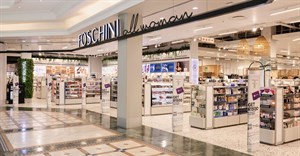
TFG (The Foschini Group) is using its physical store network as an increasingly important part of its digital retail strategy, with Bashstore generating R551m in revenue in FY26, up 306% year on year.

Image supplied
Developed by TFG's digital innovation division Bash, Bashstore connects store associates, tills and customers to a shared digital catalogue across more than 3,000 stores and 14 brands.
The proposition is designed to overcome one of the traditional constraints of physical retail: limited shelf and floor space. Instead of telling customers that a product, size or colour is unavailable, store teams can access TFG's wider online range and complete the sale from the shop floor.
The model is already recovering sales that could otherwise have been lost. According to TFG, 97% of Bashstore sales in FY26 represented sales that would otherwise have been lost.
A further 76% of Bashstore orders were fulfilled through Click & Collect, bringing customers back into stores and creating additional opportunities for browsing and purchasing.
Turning stores into endless aisles
The development forms part of TFG's broader omnichannel strategy, in which stores are increasingly being positioned as connected sales, discovery and fulfilment points rather than locations limited to their physical inventory.

Image supplied
“At its simplest, Bashstore changes the conversation from ‘try another store’ to ‘we can order it for you’,” the company says.
Anthony Thunström, CEO of TFG, said the platform demonstrates how the group's physical and digital capabilities can work together to create a more flexible retail model.
“Bashstore is a clear example of how we’re bringing our omnichannel strategy to life,” said Thunström. “By integrating our physical and digital capabilities, we’re creating a smarter, more agile retail environment that puts the customer at the centre.”
The approach also gives TFG a way to extract greater value from its existing store footprint. Rather than expanding physical inventory in every location, stores can effectively offer access to a much larger catalogue through digital channels.
From assisted selling to self-service
Bashstore has evolved across three formats, expanding from a tool for store associates into a customer-facing retail channel.
More than 23,000 TFG store associates now have access to Bashstore through mobile devices, allowing them to browse the wider catalogue and assist customers anywhere on the shop floor.
At the till, endless-aisle functionality allows staff to access products that are unavailable in the store and complete transactions without losing the customer to another retailer.
The latest development is the Bashstore kiosk, which shifts more of the browsing and ordering process directly to customers.
Drawing on the self-service ordering model familiar from quick-service restaurants, the kiosks give shoppers access to the broader Bash catalogue, allowing them to browse products, scan barcodes and complete purchases independently.
TFG is rolling out the kiosks across 100 stores, extending the endless-aisle proposition from an associate-led service into a customer-facing shopping experience.
Making the store part of the digital ecosystem
The shift has implications beyond simply increasing product availability.
With Click & Collect accounting for the majority of Bashstore orders, the digital transaction can also drive physical footfall. Customers who might otherwise have completed an online purchase can be brought back into a TFG store to collect it, creating another opportunity for discovery and additional purchases.
For TFG, this effectively turns its extensive physical footprint into an extension of its digital infrastructure.
Luke Jedeikin, co-founder of Bash, said the technology was designed to give both customers and store teams greater flexibility.
“We’ve built Bashstore to remove friction and empower store teams with intelligent tools that bring together data, technology and human connection,” said Jedeikin.
“When every store can access the wider catalogue, we give customers more choice, more convenience and more possibilities, and our teams more ways to serve them.”

Image supplied
The strategy reflects a broader shift in retail towards inventory visibility, assisted selling and unified commerce, where the distinction between a retailer's physical and digital channels becomes less relevant to the customer.
For TFG, Bashstore also demonstrates how an established store network can become an asset in an increasingly digital retail environment.
With more than 3,000 stores, 23,000 associates and one connected catalogue, the group is effectively using its physical footprint to expand what each location can sell without requiring every product to be physically stocked there.
The result is a retail model where the store becomes less about what is on the shelf and more about the choice, technology and fulfilment capabilities available behind it.