







VML Birdwatching at the Loeries | A high standard for print and design
Danette Breitenbach


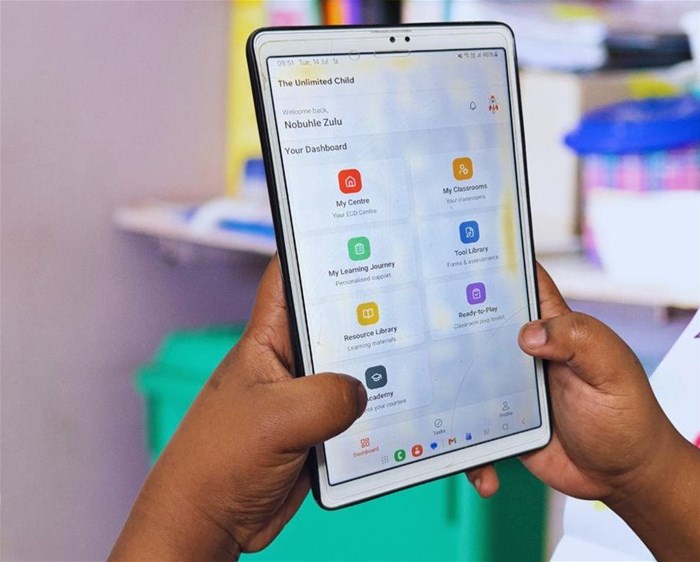
Building on its existing early learning programme, The Unlimited Child has developed an AI-powered platform designed to support ECD practitioners, improve classroom quality and strengthen early learning at scale.
The app connects supervisors, practitioners, children and caregivers through a single digital platform. It includes AI-generated development plans, classroom preparation tools, an e-learning academy, centre monitoring, real-time coaching, and resources that extend learning into home environments, including areas with limited internet connectivity.
An independent evaluation conducted in 2025 found that practitioners using the app achieved significantly higher classroom readiness scores at the start of the school year, averaging 70% compared with 46% in the control group.
The study found the app helped practitioners prepare classrooms earlier, build confidence, reduce cognitive burden and create more organised learning environments, while improving coaching efficiency and accountability across ECD centres.
"A child's first day at an ECD centre can shape their learning journey for years to come, which is why we must continue to embrace innovation that helps practitioners create the best possible start for every child," says Candice Potgieter, CEO of The Unlimited Child.
"Our children are our future, and giving every practitioner the tools to unlock that potential is exactly the kind of innovation this sector has been waiting for."
The Unlimited Child has reached more than 2.5 million children through a network of over 7,000 ECD centres and supported the development of more than 15,000 ECD practitioners.
Early childhood development has become a national priority as policymakers and business leaders increasingly recognise that learning gaps begin long before formal schooling. Delivering consistent quality across under-resourced communities, however, remains a significant challenge.
The app was developed to provide continuous, personalised support directly to practitioners. At the core of the platform is artificial intelligence trained on the organisation's curricula and quality standards. Following classroom assessments or self-evaluations, the system generates tailored development plans within seconds, providing immediate, practical guidance.
"The Unlimited Child App acts like a personal ECD coach in your pocket," says Potgieter. "It means that a practitioner in a rural community can access the same quality of guidance as one in an urban centre. It also helps our Impact Coaches walk into every centre visit already knowing where support is needed most."
The platform has been designed as an end-to-end system that supports quality, accountability and collaboration across the ECD sector. Supervisors can monitor centre performance, practitioners receive personalised development support and caregivers are increasingly involved in children's learning, helping extend education into the home.
Potgieter says the technology has been designed to complement rather than replace human coaching.
"There is always a human in the loop," says Potgieter. "The AI supports people; it doesn't make the final call. Everything is anchored to our curated curriculum and quality standards, ensuring the guidance remains practical, relevant and contextually appropriate."
"This is technology built for purpose," she adds. "It is about using AI to close the quality gap in early learning, particularly in the communities that need it most. By reducing digital anxiety, strengthening digital literacy and encouraging everyday engagement with technology, we are also helping advance digital equity across the ECD sector."
The platform builds on The Unlimited Child's established early learning model, which has demonstrated measurable improvements in child development.
Independent research using South Africa's Early Learning Outcomes Measure (ELOM) found that the organisation's programme achieved the greatest improvement in children's development among the ECD interventions studied.
Children participating in The Unlimited Child programme recorded an average improvement of 23.7 points, outperforming other programmes assessed and exceeding the benchmark for age-appropriate development. Researchers also found significant improvements in cognitive development and fine motor skills, both key indicators of school readiness.
According to the organisation, nine out of ten children in its programme achieve school readiness outcomes, compared with four out of ten children assessed through the Thrive by Five Index.
"These results validate our model and reinforce the importance of sustained, high-quality practitioner support," says Potgieter. "The App allows us to scale that support in a way that was not previously possible."
The Unlimited Child works with government departments and supports national initiatives such as Bana Pele, aimed at improving ECD registration, compliance and access to subsidies.
Through the app's data capabilities, the organisation says it can identify safety, infrastructure and compliance gaps, helping to inform corporate social investment and public-private partnerships.
The platform also supports broader efforts to professionalise the ECD sector and improve the sustainability of ECD centres, many of which operate as women-led micro-enterprises.
Investment in early childhood development is widely recognised as one of the most effective ways to improve long-term educational, social and economic outcomes.
Beyond strengthening classroom quality and school readiness, the platform supports practitioners, empowers caregivers and generates real-time data that can inform future investment and policy decisions.
"Investment in the earliest years delivers the highest economic return," says Potgieter. "What we are building is not just an app, but a platform that helps create a stronger, more equitable education system."
As South Africa looks to address education challenges at their source, the organisation believes its hybrid model of in-person coaching, digital support and real-time data offers a practical example of how technology can help improve early learning outcomes at scale.


