As fashion brands grapple with billions of unsold garments and consumers become increasingly value-conscious, South African retailer Faro is proving that off-price retail is no longer simply about discounts, it's becoming a strategic solution for both brands and shoppers.
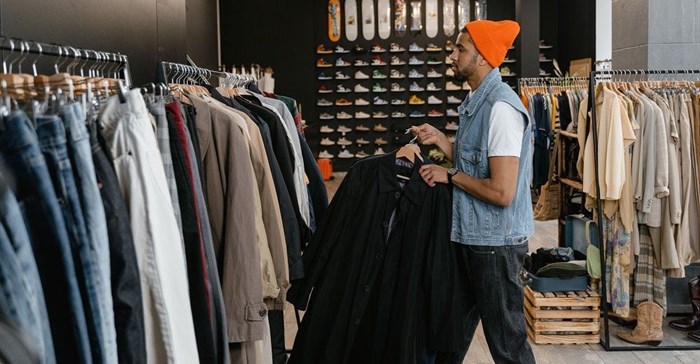
Image supplied
Every year, the global fashion industry produces an estimated 80-150 billion garments, yet between 20-60 billion items remain unsold. Traditionally, excess inventory has been heavily discounted, diverted into secondary markets or, in some cases, destroyed—eroding margins and damaging brand value.
For retailers and fashion brands alike, inventory management has evolved into a commercial imperative.
This is the opportunity Faro believes it has captured.
Operating at the intersection of surplus inventory, premium fashion brands and increasingly price-sensitive consumers, the South African retailer is building a business model that addresses one of the fashion industry's fastest-growing challenges while offering shoppers access to international brands at significantly lower prices.
From failed startup to fast-growing retailer
According to chief executive David Torr, Faro's success was born out of failure.
"Faro wasn't an overnight success; it was born out of a hard pivot and the willingness to accept defeat when our initial social commerce model didn't land," he says.
"That failure forced us to stop chasing abstract technology and start building a commercial model that reflects the daily reality of our customers."
Instead of focusing on technology alone, the business shifted towards solving two increasingly connected problems: helping global fashion brands responsibly move excess inventory while giving consumers access to premium labels without premium prices.
A changing South African shopper
The timing could hardly have been better.
South African consumers continue to face significant financial pressure, fundamentally changing how they shop.
According to PwC's Voice of the Consumer 2025 report, more than half of South African consumers struggle to pay their monthly bills, while 54% have adopted deliberate cost-saving strategies.
Earlier reports by Reuters also found around 40% of shoppers had shifted towards discount retailers, while promotional pricing increasingly drives purchasing decisions.
Those trends are reflected across global fashion markets.
McKinsey's State of Fashion 2026 report predicts consumers will remain cautious, prioritising value and increasingly trading down across apparel categories.
"Consumers still want recognised brands," says Torr.
"They're simply becoming far more selective about what they're prepared to pay."
The rise of off-price retail
Rather than viewing discount retail as a defensive strategy, Faro believes it has become an increasingly permanent feature of modern fashion.
Its stores stock from internationally recognised brands including Zara, Levi's, H&M, Guess, Reebok, ASOS and Jack & Jones, sourcing excess inventory from global suppliers seeking controlled secondary markets.
The geographic separation benefits both parties.
Brands are able to clear surplus inventory without flooding their primary markets with discounted merchandise, helping preserve pricing integrity while reducing write-offs.
Consumers, meanwhile, gain access to premium international labels at accessible prices.
In an increasingly competitive retail environment, that combination has become particularly attractive.
Competing in the age of Shein and Temu
International value retailers have also reshaped South Africa's fashion landscape.
Research by Reveal and Yazi found that Shein and Temu together account for more than 13% of South Africa's clothing spend, demonstrating how rapidly global e-commerce platforms have disrupted local apparel retail.
For domestic retailers, the challenge extends beyond price.
Consumers increasingly expect branded products, convenience and value simultaneously.
Faro argues that carefully curated off-price retail offers a differentiated alternative by combining globally recognised brands with local physical retail experiences.
Data, not discounts, drives performance
While many associate off-price retail with bargain hunting, Torr says successful execution depends far more on sophisticated merchandising than aggressive discounting.
"One of our biggest internal shifts has been the move from manual guesswork to an automated merchandising ecosystem," he explains.
"By building a system on our own transactional data, we aren't just making faster decisions—we're making commercially grounded ones."
The retailer uses customer transaction data to determine product allocation, pricing strategies, replenishment cycles and store-specific assortments.
That analytical approach recognises that consumer demand varies significantly across different regions, requiring stock to be allocated strategically rather than uniformly.
Rapid expansion
The strategy appears to be delivering results.
Faro reports annual revenue growth from $3m to $15m, with ambitions to double that again to $30m during 2026.
The business currently operates 19 stores, plans to reach 30 locations before the end of the year, and employs more than 500 people.
The company also reports same-store growth between 40% and 50%, substantially ahead of many established global off-price retailers, although comparisons remain difficult given differences in size and market maturity.
Its store economics have also attracted attention.
Each outlet reportedly costs approximately $120,000 to establish while generating around $200,000 in annual net margin, providing rapid payback periods that support further expansion.
Winning over landlords
The retailer's performance has also attracted the attention of commercial property owners.
Gavin Jones, head asset manager for Growthpoint's retail portfolio, says Faro has exceeded expectations across its shopping centres.
"Since opening, Faro has consistently delivered robust and growing trading densities, strong customer appeal and a differentiated retail offering."
He says the retailer has established itself as a standout performer within the unisex apparel category while strengthening tenant mixes through its premium-brand positioning.
"The brand effectively addresses growing demand for premium fashion brands at accessible price points."
Scaling carefully
Despite its rapid growth, Torr says expansion has required discipline rather than simply opening more stores.
"We've had to be incredibly honest about where our value lies."
Early experiments targeting lower-income consumers demonstrated that serving different market segments requires fundamentally different retail models rather than simply lowering prices.
That experience has informed Faro's expansion strategy, with the business now focusing on carefully selected locations that align with its merchandising model.
The retailer reports average store-on-store growth of approximately 35% and believes it now has a clear pathway towards 100 stores.
A global opportunity
South Africa may have provided the proving ground, but Faro's ambitions extend well beyond the local market.
The retailer has identified Brazil and Chile as priority international expansion markets, while India, Mexico, Turkey, Argentina and Indonesia remain under consideration.
For Torr, the company's future rests on trends that extend far beyond South Africa.
The combination of constrained consumer spending, growing volumes of excess fashion inventory and continued demand for premium brands has become a structural feature of global retail rather than a temporary economic cycle.
As fashion brands search for smarter ways to manage inventory while protecting margins, and consumers increasingly prioritise value without sacrificing brand preference, off-price retail is evolving from a niche retail category into a strategic component of the global fashion ecosystem.
For Faro, that shift represents not only a local growth story but the foundation of an international retail blueprint.