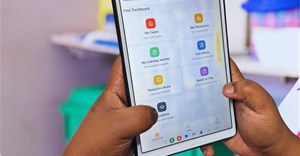
Device choice is shaping how students think, create and learn

Device choice is increasingly influencing the quality of learning outcomes.
Beyond access: raising the ceiling
The SAMR model is a widely recognised framework for integrating technology in education. It outlines a progression from simple substitution to redefinition of learning. At its most basic level, technology replaces traditional tools. At its most advanced, it enables entirely new ways of learning that were previously not possible.
What is often overlooked is that not all devices support this progression equally. Devices that are slow, unreliable or difficult to manage can keep schools at the lowest level of substitution. Devices that are more stable, intuitive and integrated into classroom workflows are more likely to support movement toward augmentation, modification, and, in some cases, redefinition, where students collaborate, create and solve problems in more dynamic ways.
Making technology practical in education
Historically, cost has been a major barrier to the widespread adoption of more advanced devices in schools. Durability, performance and lifespan are also key considerations in determining the total cost of ownership, particularly in environments where devices are used over several years.
When devices last longer and require less maintenance, schools can reduce replacement cycles and better manage long-term budgets. The availability of productivity and creative tools also influences how effectively devices are used in teaching and learning environments.
The importance of implementation and support
Hardware alone does not transform education. One of the recurring challenges in schools is the implementation of new technology. Devices are often introduced without sufficient teacher training, integration planning or ongoing support, which can result in underutilisation.
Teacher preparedness plays a critical role in determining whether technology is meaningfully embedded in the classroom. Training and support programmes are often cited as key factors in improving adoption and classroom integration.
Alignment in the classroom
Many schools operate with mixed device environments, where students and teachers use different systems. This can create challenges around compatibility, collaboration and classroom management.
Shared ecosystems or compatible platforms can help improve workflow efficiency, enabling easier file sharing, collaboration and lesson delivery. Classroom management tools can also assist educators in guiding student activity in real time.
Security and device management in schools
In digital learning environments, security, privacy and device control are important considerations, particularly for younger learners.
Schools increasingly rely on mobile device management systems and centralised administration tools to control access, enforce usage policies and manage devices remotely. These systems can help reduce administrative burden while maintaining oversight of how devices are used during and outside school hours.
Creativity and skills development
Modern learning devices increasingly support creative output as well as information consumption. Tools for video production, music creation, design and presentation are commonly used in education settings to develop digital literacy and applied skills.
This shift supports more project-based and experiential learning approaches, where students produce work rather than only consuming content. In some cases, this can enable more advanced forms of learning aligned with higher-order thinking and problem-solving.
Levelling the playing field
At a broader level, access to effective learning tools can influence educational equity.
When students have access to reliable technology, they spend less time dealing with technical issues and more time engaging with learning tasks. When teachers are adequately supported, they are more likely to integrate digital tools into their teaching practice. When schools are able to sustain technology over time, benefits can extend more consistently across cohorts of learners.
Device choice, therefore, does not only affect how students complete tasks. It can influence how they learn,