
The number that should keep South African telecommunications executives awake at night: -25%
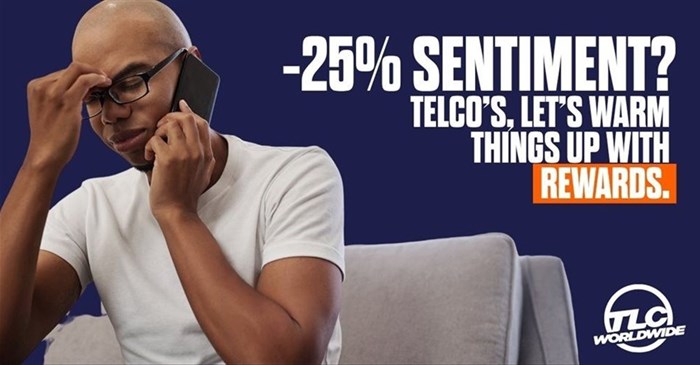
But here is what that number actually represents: millions of ordinary South Africans - prepaid users, township residents, students, spaza shop owners, domestic workers, gig economy drivers - who feel that their mobile network doesn’t see them, doesn’t value them, and in most cases, couldn’t bother to understand them.
South Africa's telecommunications market is, in stark reality, two markets operating under the same brand umbrella
When it comes to loyalty; the first market - postpaid, urban, formally employed, earning above R10,000 a month - is the market this industry almost exclusively designs for. It is the market that loyalty programmes, lifestyle benefits, and partner ecosystems are built to serve. It represents roughly 20% of subscribers.
The second market - prepaid, price-sensitive, topping up R10 at a time, switching SIMs when signal drops, navigating load-reduction on backup data they cannot afford to waste - is the market that generates the bulk of subscriber volume and, increasingly, the bulk of the industry's reputational damage. It represents over 80% of subscribers and is largely invisible in the strategic conversation about customer loyalty.
See our loyalty and rewards solution for Three Mobile in the UK
Of course, the argument to be made is that loyalty cannot solve a trust issue. When a matric student in Tembisa buys a 1GB bundle on a Tuesday and finds it gone by Thursday - background app updates she never chose, data billing she cannot interrogate, a call centre she cannot afford to call - she’s not thinking "I wish my network had a better rewards programme." She thinks: "I’m being robbed." That emotional reality is not a marketing problem. It is a product integrity problem that not even the best loyalty programme can resolve.
But, our optimism lies in our ability to deliver value despite the inevitable and uncontrollable issues outside our scope. Research demonstrates that customers who feel genuinely recognised and valued stay longer, spend more, and generate referrals that reduce acquisition costs. In a market defined by intense competition - not only between Vodacom, MTN, Cell C, and Telkom Mobile, but increasingly against Rain's unlimited data disruption, MVNOs repackaging connectivity at lower margins, and fintech platforms bundling data into financial products - retention has never mattered more.
The case for loyalty - done properly
None of this means loyalty is the wrong strategy. It means loyalty programmes built exclusively for postpaid customers, modelled on airline miles mechanics, and measured by middle-income consumer benchmarks, will continue to underperform in a market they were never designed for.
The economics are not in dispute. Increasing customer retention by 5% can increase profits by between 25% and 95%. Acquiring a new customer costs between five and twenty-five times more than keeping an existing one. Loyalty programme members, where programmes are genuinely valuable, generate 12–18% more revenue annually than non-members (bain.com/insights/topics/loyalty/)
A loyalty strategy worthy of this market starts with the prepaid majority. It rewards the R20 top-up as meaningfully as the R999 contract renewal. It designs for the Nokia C-series phone and the entry-level Android before it designs for the flagship. It makes the programme so simple that a first-time smartphone user in a rural area understands its value immediately.
In a category so heavily relied on by the masses, we believe that value should be delivered in spite of a customer’s ability to pay in excess for it. We believe that value for this market sits squarely in what it delivers functionally, not aspirationally. At TLC Worldwide Africa, we are encouraging the telco industry to look honestly at the 80% of the market it has spent years designing around rather than designing for and get in touch with us to deliver a reward solution that restores - at least to some degree - what consumers believe has been removed.
Contact us

- The number that should keep South African telecommunications executives awake at night: -25%08 Jul 12:41
- TLC Worldwide Africa celebrates the success of its 2025 TLC Gives Back initiative02 Dec 08:46
- Understanding the growing emotional drivers behind consumer choice13 Nov 13:33
- TLC Worldwide Africa champions responsible marketing through TLC Gives Back initiative31 Oct 11:00
- The rise of the private label and how brands can fight back16 Oct 12:37