Business Rescue Practitioners say there are no viable alternatives to a rescue plan that has legally lapsed
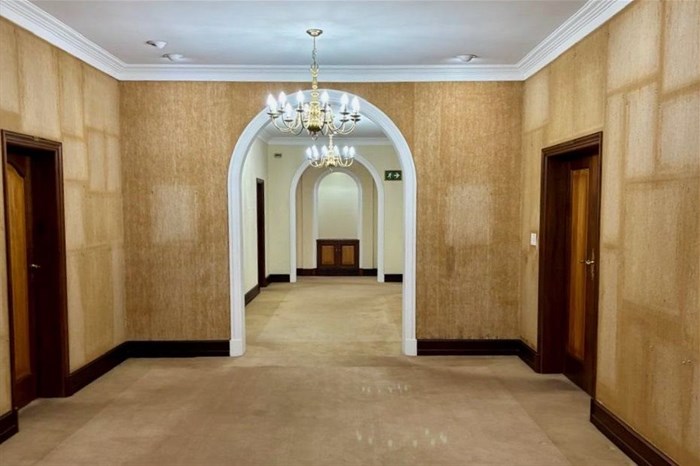
Tongaat head office stripped of expensive paintings and antiques ahead of a possible visit by liquidators. Photo supplied
- The Durban High Court will hear arguments next week on whether to liquidate sugar giant Tongaat-Hulett.
- The SA Canegrowers Association says 27,000 small-scale growers, tens of thousands of farm workers, and entire rural communities face devastating consequences if it is liquidated.
- The Business Rescue Practitioners (BRPs) say there are no viable alternatives to a rescue plan that has legally lapsed.
- The IDC, which extended R200-million in emergency funding in May, says the BRPs have “exaggerated the dire financial position”.
Next week could be D-Day for the commercial survival of sugar giant Tongaat Hulett.
Arguments will be presented on Tuesday and Wednesday (16 - 17 June) in the Durban High Court for and against its provisional liquidation.
The SA Canegrowers Association, which represents 27,000 small-scale growers and 1,100 large-scale commercial growers, has painted a dire picture if the company is liquidated.
“If Tongaat Hulett enters unfunded liquidation, it is not only the operations [the mills] which will cease to operate; growers will have nowhere to supply their cane, potentially excluding as much as 4.6-million tons of raw cane from the local value chain every year,” said the association’s chairperson, Higgins Mdluli.
“Tens of thousands of workers on farms will become unemployed, and entire communities will lose the income that drives secondary businesses: transporters, fuel stations, restaurants, shops and supermarkets.”
He said the association and others were talking to all stakeholders to explore ways to prevent liquidation.
Tania Broughton 13 Mar 2026 GrowerCo proposal
In recent weeks, it was announced that an independent “grower led group” named GrowerCo had been formed. The group proposed putting ownership of the company in the hands of those involved in the industry.
While the finer details of the plan have never been disclosed, court papers reveal small-scale growers would be included as equity partners and earn returns not only on their sugarcane but a share in equity growth over the long run.
But it appears this proposal has not found favour with the Business Rescue Practitioners (BRPs), who have been running Tongaat’s affairs since it was placed in business rescue in October 2022.
Blame game
In January 2024, the only rescue plan presented to creditors was that of the Vision Group. Because Vision had previously acquired the lender group bank loans, it became the main controlling creditor. It used this power to approve its own business rescue plan which relied on crucial funding from the Industrial Development Corporation (IDC).
In their application for provisional winding up of Tongaat in February this year, the BRPs said the plan was incapable of being implemented, blaming Vision for “changing the goalposts” by demanding sugar industry reforms and further funding from the IDC.
On the day of the initial court hearing, with the crucial milling season looming, the IDC agreed to increase its funding from R2.3bn to R2.5bn, saying the extra R200m would be available until the end of June to allow for the mills to open.
The matter was postponed until 17 June.
Brendan Olivier 23 Oct 2025 Since then, further affidavits have been filed.
The BRPs say there is still no prospect for saving the company and there are no viable alternatives to Vision’s plan, which legally has lapsed. This would appear to indicate that the GrowerCo proposal is off the table, as is another proposal put forward by Vision’s competitor, Mozambique based RGS Holdings.
The BRPs claim the IDC is putting up bureaucratic obstacles to accessing funding.
This has been strongly denied by the IDC’s Bongani Miya. He said the funding was conditional on the BRPs providing monthly budgets.
Business rescue fees questioned
The IDC had raised “concerns” regarding some expenses put forward in the May 2026 budget, which were not operational in nature. These included: domestic expenses for a “consultant”; monthly fees for the BRPs of R2.3m for April and R1.38m for May; legal fees of R1.4m for April and R3.5m for May; and BRP consultant costs of R161,500 for April.
“In order to accommodate the broader objective of a restructuring solution and make progress, the IDC has approved these non-operational expenses,” Miya said.
He said it was also clear there was no need for additional funding because Tongaat “has been able to operate within the limit of R2.3bn through the continued utilisation of post commencement finance reflows”.
He said that if the BRPs had been presented with alternative rescue proposals, it was incumbent on them to have given details of these and the reasons for their rejection.
“The BRPs have been far from candid ... They have exaggerated the dire financial position of the company which has caused unnecessary alarm,” he said.
Robert Gumede 19 May 2026 Vision Group defends itself
Vision, which has been accused by some of orchestrating the collapse of business rescue for its own ends, still maintains that “as things stand, there are no reasonable prospects of rescuing the company”.
It blames the lack of “committed funding” by the IDC and its “non-committal posture”.
Vision says it has made “at least four proposals” to the IDC since September last year, all of which have been rejected.
“Regrettably, the relevant stakeholders are further apart than they have ever been,” said Vision director Rutenhuro Moyo.
“Absent any demonstrated reasonable prospect of rescue, liquidation appears inevitable.”
“Twisting the narrative”
Shareholder and intervening party, Abrina Pty Ltd, is opposing liquidation.
Director Adharsh Maharaj has accused the BR’s of “twisting the narrative” by portraying themselves as saviours. The BRPs and Vision, he said, were simply trying to strong arm and exploit the IDC.
“Their conduct reveals a pattern of opportunism, reassuring stakeholders of positive prospects, while privately preparing liquidation papers to use as leverage.”
Maharaj said the BRPs had refused to furnish the court, or the affected parties, with any objective proof regarding the financial position of the company, “and it is inappropriate to seek an order [for liquidation] based entirely on their word”.
Update: further affidavits filed by BRPs
In further affidavits only uploaded on Tongaat’s business rescue website late on Thursday, due to an “administrative error”, the BRPs hit back at IDC. They insist that the IDC’s refusal to approve some budgeted items (such as their fees) was an “unreasonable fetter” on Tongaat’s ability to function and an interference with their “statutory entitlement to reasonable remuneration”. It was “ludicrous” for the IDC to question whether the company was liable to pay its attorneys (engaged in the liquidation proceedings) and the requirement that prior approval be given to incur legal costs was “an untenable constraint”.
The BRPs also denied being “far from candid”, saying they had placed before the court a comprehensive and honest account of Tongaat’s financial position, the status of the post-commencement finance (PCF) facility and the absence of any reasonable prospect of rescue.
Regarding the IDC’s allegation that they had not been transparent about other rescue proposals it had received - specifically from independent “grower led group” GrowerCo, and Mozambique based RGS, the BRPs said these were not implementable funded business rescue plans which could be put to creditors for a vote.
GrowerCo’s proposal did not address Vision’s secured claims of over R11bn, did not identify unconditional and immediately available funding, and remained contingent on IDC participation “which had not materialised”.
They said the PCF facility expires on 30 June 2026.
“This is a hard deadline. In the absence of committed funding beyond that date, Tongaat will be unable to meet its obligations and will be forced to cease operations. The consequences will be catastrophic. It is the IDC’s own conduct which has undermined the very prospect of rescue.”
On the allegation by intervening party, cane grower Abrina, that the liquidation application was merely an attempt by the BRPs and Vision to “strong arm” the IDC into providing more funding, the BRPs said the allegation were “unfounded criticism”.
“Abrina is unable to produce a single shred of evidence which contradicts the BRP’s submissions regarding the dire financial position of Tongaat, the failed implementation of the rescue plan or Tongaat’s commercial and factual insolvency.
“Tongaat’s liabilities massively exceed the value of its assets. Vision’s secured claims exceed R11-billion. The IDC’s exposure is about R2.5-billion. All of Tongaat’s assets are encumbered, the IDC holds security over its bank accounts, inventory and debtors, and Vision holds security over virtually all remaining assets.
“It is not our wish that it be placed in liquidation. We approach this court with heavy hearts,” they said.
Update on 2026-06-12 2.20pm
The article was updated with a replying affidavit from the business rescue practitioners addressing the IDC's concerns. It was only uploaded on Tongaat’s business rescue website late on Thursday, due to an “administrative error”.
This article was originally published on GroundUp.
© 2026 GroundUp. This article is licensed under a Creative Commons Attribution-NoDerivatives 4.0 International License.