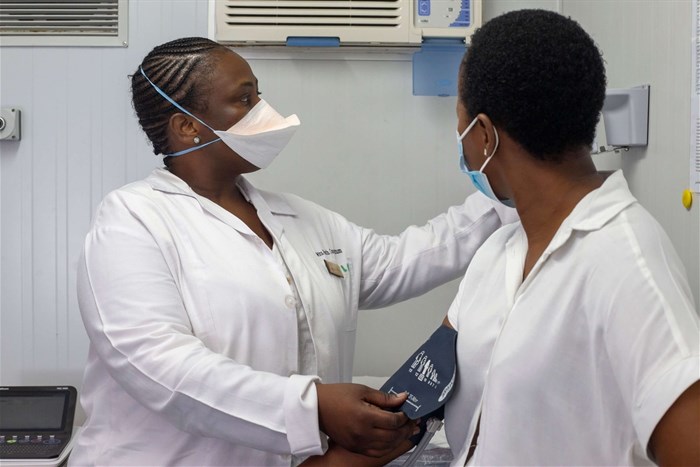
South Africa has once again made medical history: BEAT Tuberculosis’s clinical study set a global standard for TB care and was published in the New England Journal of Medicine (NEJM), the world’s highest-ranked medical journal.
Conducted at the Clinical Health Research Unit (CHRU) Isango Lethemba TB Research Unit in the Eastern Cape and King Dinizulu Hospital Complex in KwaZulu-Natal, the BEAT Tuberculosis clinical study enrolled more than 400 participants over two years during the Covid-19 pandemic.
The study was funded by the United States Agency for International Development (USAid) and executed by the University of the Witwatersrand (Wits), in collaboration with the Department of Health.
Tania Broughton 1 Jul 2026 Full circle
GroundUp reports that rifampicin has been a key TB drug since the 1970s. However, over time, many patients have had TB strains that are resistant to it.
The BEAT TB trial — led by Dr Francesca Conradie, principal investigator of BEAT Tuberculosis and a researcher at Wits’ clinical health research unit, and her team — has demonstrated the effectiveness of a new six-month regimen for treating patients with rifampicin-resistant TB.
“This project has gone full circle,” says Conradie.
“The results from this trial have changed international guidelines.
“Being published in the New England Journal of Medicine is proof that South Africa produces world-class research that improves the lives of patients globally.”
The primary aim of BEAT Tuberculosis was to evaluate the safety and effectiveness of a novel, shortened treatment regimen for DR-TB (drug-resistant TB) compared with the established standard of care.
The standard treatment at the time required a seven-drug regimen administered over a minimum of nine months.
BEAT Tuberculosis tested a streamlined regimen of four to five medications, including the newer agents bedaquiline and delamanid, administered over six months.
Inclusivity
The BEAT Tuberculosis trial enrolled children, pregnant women and breastfeeding mothers — usually excluded from clinical research —alongside adults.
The result is a treatment regimen that can be used across the entire family.
The 10 women enrolled in the study gave birth to healthy babies, and nine of them were successfully treated.
BEAT Tuberculosis has since been cited internationally as a model for inclusive clinical research methodology, and the findings have influenced World Health Organisation (WHO) policy on the treatment of DR-TB globally, including for pregnant women and children.
“This is a one-size-fits-all treatment regimen,” explains Conradie.
“Adherence is much easier when the three-year-old, the teenager, the mother and the father are all receiving treatment of similar duration and composition.
“That simplicity saves lives.”
Pragmatic
Over 400 volunteers were randomly assigned to either receive the nine-month standard-of-care regimen at the time the trial was fully enrolled (October 2023), or the researchers’ new six-month regimen containing bedaquiline, linezolid, delamanid, and either levofloxacin or clofazimine.
(Bedaquiline and delamanid are relatively new drugs, approved for drug-resistant TB since 2012.)
Both groups did nearly identically well, with 86% having a successful TB-free outcome. Ten people died in each group (often, TB patients are very ill at enrolment).
This was a pragmatic trial, meaning it took place in routine health facility settings, not in the idealised environment of most clinical trials.
Conradie explained to GroundUp: “What was unusual about this study is that it was pragmatic and enrolled a similar population to those who are diagnosed and treated in South Africa.
“Half were people with HIV. More than half were underweight, and very few of the usual exclusionary criteria were in place, such as homelessness and substance abuse.”
Exceptional
South Africa’s National Clinical Advisory Committee already reviews and approves the regimen for pregnant women presenting with drug-resistant TB, while other provinces are adopting the treatment, particularly when treating children.
“During 2024, South Africa had 249,000 people who were infected with active tuberculosis, and 54,000 died from the disease,” says Professor Norbert Ndjeka, chief director of TB control and management at the Department of Health.
“Not only did BEAT TB produce world-class research, but it is also being implemented progressively across South Africa and globally and is internationally recognised.
“South Africa has accomplished something exceptional.”
According to GroundUp, drug-resistant TB is a global problem, including in the United States, and studies like these are useful to people well beyond South Africa’s borders.