In the luxury safari sector, extraordinary landscapes and beautiful lodges may bring guests through the door, but it is ultimately the human experience that determines how a destination is remembered.
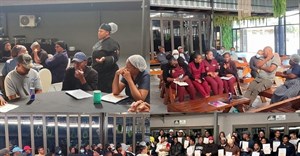
This philosophy formed the foundation of a recent three-day onsite training programme conducted by Sam Hospitality for the teams of Biyela Lodge and Mthembu Lodge at mFulawozi Wilderness in KwaZulu-Natal.
The programme, Luxury Guest Experience & Service Excellence, was designed specifically for the two lodges, with the objective of taking already established hospitality foundations and developing greater consistency, personalisation, confidence, attention to detail and anticipatory service across the guest journey.
But to understand the importance of service excellence at these two lodges, one first has to understand the destination they represent.
mFulaWozi Wilderness: More than a safari destination
Situated in the heart of Zululand in KwaZulu-Natal, mFulaWozi Wilderness brings together wildlife, wilderness, Zulu history, culture, conservation and luxury hospitality.
Guests can experience Big Five game viewing, wilderness walks, birding, wellness treatments and luxury lodge accommodation. Yet the property's proposition extends beyond the traditional safari experience. Its stated purpose is to protect and preserve the wilderness and support surrounding communities for future generations.
This connection between tourism and community is particularly significant.
The story of mFulawozi developed through collaboration with traditional leaders surrounding the Hluhluwe-iMfolozi landscape. According to the reserve, the initiative has helped expand the conservation footprint while connecting tourism with community development, training and employment.
This means that a stay at mFulaWozi is about considerably more than checking into a beautiful safari lodge.
There is a wider story of land, heritage, people, wildlife and conservation.
For hospitality professionals, that creates an interesting challenge: how do you ensure that the service experience is as distinctive as the destination itself?
That was one of the central questions behind our training.
2 lodges, 2 distinctive experiences
mFulaWozi Wilderness is home to two luxury properties: Biyela Lodge and Mthembu Lodge.
While both are part of the same wilderness experience, they have their own identities, architecture and guest propositions.
Biyela Lodge: Privacy, views and contemporary eco-luxury
Biyela Lodge is positioned on a hillside overlooking the flood plains of the White iMfolozi River.
The location is one of the property's defining features. From the elevated lodge and private suites, guests can look across the wilderness and potentially observe wildlife moving through the landscape below.
The lodge currently describes itself as comprising 12 ultra-luxury standalone suites, each with its own private deck, with most suites also featuring a private pool.
The suites include air conditioning, king-size beds, coffee and tea facilities and Wi-Fi, while the wider Biyela experience includes private dining arrangements, spa treatments on request, a library and cocktail lounge, outdoor showers and pools.
There is a strong sense of privacy to the Biyela proposition.
Rather than separating the accommodation completely from its surroundings, the architecture and viewing decks encourage guests to remain connected to the landscape even when they are inside their suites.
For a hospitality operation, however, impressive accommodation creates equally impressive expectations.
When guests arrive at a property of this calibre, excellent housekeeping, confident food and beverage service and a warm welcome are expected. The opportunity for differentiation therefore lies increasingly in the smaller details: recognition, anticipation, storytelling, seamless communication between departments and the ability to personalise the experience without becoming intrusive.
That became an important component of our work with the Biyela team.
Mthembu Lodge: Luxury connected to history and place
Mthembu Lodge offers a different but complementary experience.
Situated on the embankment of the White iMfolozi River, the lodge has seven ultra-luxury one-bedroom suites and two luxury family suites, with the family suites accommodating up to four guests.
The property's story is particularly compelling.
The lodge says its private luxury suites were hand-built, stone by stone, by members of the Mthembu clan. Its circular configuration also draws on the significance of the circle in Zulu tradition, representing concepts of wholeness.
This creates a relationship between architecture, community and cultural identity that goes beyond décor.
Facilities at Mthembu include a swimming pool in the main lodge area, air-conditioned accommodation, king-size beds, coffee and tea stations, Wi-Fi, private dining setups, a walk-in wine cellar and gift shop. Guests can also access spa treatments and laundry services on request. The lodge highlights experiences and features including outdoor showers, baths with views, an outdoor boma and private decks overlooking the wilderness.
For guests, the result is a luxury environment in which comfort and wilderness remain closely connected.
One moment they may be enjoying the privacy of their suite; the next they may be watching wildlife from their deck or heading into the reserve with a guide.
Experiencing the wilderness beyond the lodges
The accommodation is only one part of the mFulaWozi experience.
The reserve promotes Big Five game viewing as a core part of the destination, together with birding, wilderness walks and wellness experiences.
Guided walks can also be arranged on request. The distance of these walks can be adjusted to suite guests needs.
The guest experience does not begin when dinner is served and stop when the plates are cleared. It moves continuously between the lodge, room, restaurant, bar, game drive, wilderness experience and interactions with different employees.
Moving from good service to exceptional hospitality
The objective of the onsite programme was therefore not simply to teach employees how to perform individual tasks.
mFulaWozi Management wanted to strengthen the service culture.
The programme covered guest experience, professional communication, front-of-house standards, food and beverage service, bar service, housekeeping, turndown, maintenance, teamwork, leadership, service recovery and practical guest scenarios.
Particular emphasis was placed on the difference between performing a task and understanding the emotional impact of that task.
A technically correct check-in can still feel transactional.
A perfectly prepared drink can still feel ordinary.
A spotless room can still lack warmth.
Luxury hospitality happens when technical competence is combined with emotional intelligence and attention to detail.
The first 90 seconds matter
One area explored extensively was the arrival experience.
Guests begin forming impressions before anyone says a word.
They notice whether employees acknowledge the arriving vehicle, whether someone appears ready to receive them, staff posture, eye contact, the handling of luggage and whether the entire arrival feels calm or chaotic.
The programme therefore introduced a structured first-contact approach incorporating acknowledgement, professional presence, genuine connection, personalised greeting, luggage assistance, refreshment and a calm transition into the lodge.
At this level of hospitality, reception should never feel merely like an administrative desk.
It should feel like the beginning of an experience.
Personalisation without intrusion
Smaller luxury lodges have an advantage that large hotels sometimes struggle to replicate: the ability to genuinely recognise individual guests.
Our training encouraged teams to learn and correctly pronounce guest names, understand relevant preferences, share useful service information between departments and shifts, and use that knowledge naturally.
If a guest orders rooibos without milk after a game drive, for example, the following day's team should ideally not make that guest start the relationship from zero.
But personalisation also requires judgement.
Not every guest wants extensive conversation. Some want privacy. Others enjoy storytelling and interaction.
Luxury service therefore involves learning to read the guest, rather than forcing every guest through exactly the same service script.
Housekeeping: Clean is only the beginning
At properties such as Biyela and Mthembu, housekeeping carries enormous responsibility for the perception of value.
A room may technically be clean and still fall below luxury expectations.
Our programme therefore focused on preparation, cleaning, presentation, detailed inspection and ensuring that a room is genuinely guest-ready before release.
The difference is subtle but important.
The question should not simply be:
"Did I clean the room?"
It should be:
"If I were the guest entering this room and paying for a luxury experience, what would I notice?"
That changes the employee's perspective from completing a checklist to seeing the environment through the guest's eyes.
Service excellence includes maintenance
The same philosophy applies to employees who may not traditionally consider themselves part of the "service" team.
Maintenance is hospitality.
A faulty light, loose handle, noisy fan, uncomfortable room temperature or poorly maintained pathway affects the guest regardless of which department is responsible.
Our training therefore encouraged preventative thinking: identify defects before the guest does, report them, take ownership and follow through.
Developing a uniquely mFulaWozi standard
Perhaps the most important objective was ensuring that mFulawozi does not simply imitate another five-star safari lodge.
The opportunity is to develop hospitality that guests can recognise as belonging specifically to this destination.
As part of the programme, we developed the mFulaWozi behavioural compass, linking the name to service behaviours including recognising guests, finding opportunities to exceed expectations, understanding before responding, noticing details, anticipating needs, working as one team, owning problems and individualising experiences.
We also explored signature moments that could connect service more closely with place — from arrival and turndown to post-game-drive hospitality and departure.
But differentiation should never become theatre for its own sake.
A signature touch needs to be authentic, useful, safe, discreet, sustainable and operationally repeatable.
Hospitality training cannot end when the trainer leaves
One of the biggest challenges in hospitality training is sustainability.
Three days of intensive learning can create enthusiasm, but service culture is built through what happens on the fourth day, the thirtieth day and six months later.
Managers and HODs therefore play a critical role.
The objective is for leaders to inspect what they expect, coach specifically rather than generally and recognise employees who create exceptional guest moments.
Tourism, conservation and people development must work together
What makes the mFulaWozi story especially relevant to the wider South African hospitality and tourism industry is the connection between luxury tourism, conservation and surrounding communities.
mFulaWozi describes its purpose in terms of conservation, community upliftment, sustainability, protection of wilderness and respect for the heritage of the land. It also states that local communities have benefited through infrastructure, training and employment connected with the initiative.
That matters.
South Africa possesses extraordinary natural tourism assets, but sustainable luxury tourism cannot be built around landscapes and buildings alone.
It requires investment in people.
When local employees develop hospitality, leadership, communication and technical skills, the impact extends beyond one guest stay. Skills remain within communities, career opportunities expand and destinations become better positioned to compete internationally.
Sam Hospitality: Developing the people behind the guest experience
For Sam Hospitality, the mFulaWozi assignment reflects the type of work we have increasingly focused on within safari lodges and other high-end hospitality environments.
Founded in 2011, Sam Hospitality specialises in practical onsite hospitality training and consulting for safari lodges, hotels, resorts, guest houses, restaurants and other hospitality establishments.
Our approach is not based on taking the same generic training programme from property to property.
We study the operation, the guest journey, the people and the positioning of the establishment and then develop training around its actual service environment.
At mFulaWozi, the objective was therefore not simply to teach conventional five-star hospitality.
It was to help strengthen a service culture capable of combining the warmth and authenticity of people with refined luxury service, confident communication, operational consistency and memorable personalisation.
The future of African luxury is human
The international traveller can find beautiful hotels and lodges in many parts of the world.
What cannot easily be replicated is the combination of African wilderness, wildlife, cultural heritage, community, storytelling and genuine human warmth.
That is where destinations such as mFulaWozi have an opportunity to differentiate themselves.
Biyela Lodge and Mthembu Lodge provide the physical environment for an exceptional luxury safari experience. The wilderness provides the landscape. Wildlife provides moments that cannot be scripted. The history and communities provide identity.
But people ultimately connect all of those elements.
The housekeeper who notices something before the guest does.
The bartender who remembers a preference.
The guide who turns a wildlife sighting into a story.
The maintenance employee who fixes a problem before it becomes a complaint.
The waiter who understands when to engage and when to give a couple privacy.
The manager who coaches rather than simply criticises.
That is where luxury becomes personal.
And it is why our closing message to the mFulaWozi teams was simple:
Warmth without over-familiarity. Luxury without stiffness. Efficiency without rushing. Personalisation without intrusion. Difference without gimmicks.
Every guest. Every department. Every day.
About Sam Hospitality
Sam Hospitality is a South African hospitality training and consulting company founded in 2011 by Samkeliso Nkwanyane, hospitality trainer, consultant, guest experience specialist and creative director. The company provides customised onsite training for safari lodges, hotels, resorts, restaurants, guest houses and other hospitality establishments, with a focus on service excellence, guest experience, front of house, food and beverage, housekeeping, leadership and luxury lodge operations.
About mFulaWozi Wilderness
mFulaWozi Wilderness is a luxury wilderness destination in Zululand, KwaZulu-Natal, combining Big Five safari experiences with conservation, community upliftment, Zulu cultural heritage and luxury accommodation at Biyela Lodge and Mthembu Lodge.
Discover mFulaWozi Wilderness