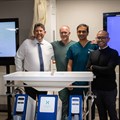
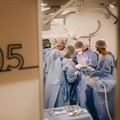
South Africa’s first private academic hospital has performed its first robotic procedure. Dr Nadine Harran, a surgeon in Wits Donald Gordon Medical Centre’s (WDGMC) colorectal unit, ushered in the hospital’s robotic-assisted surgical programme using the Da Vinci Xi robotic surgical system.

Dr Nadine Harran, a surgeon in Wits Donald Gordon Medical Centre’s (WDGMC) colorectal unit, ushered in the hospital’s robotic-assisted surgical programme using the Da Vinci Xi robotic surgical system. Image credit: Wits Donald Gordon Medical Centre
“The system provides surgeons with a magnified, three-dimensional view of the operating area and wristed instruments that translate their hand movements into precise movements inside the body, ensuring that the surgeon remains in control throughout the procedure.
“The seated operating position also provides ergonomic benefits to the surgeon during lengthy procedures,” says Harran.
Future of surgery
According to the academic head of surgical gastroenterology at the University of the Witwatersrand (Wits), Professor John Devar, the technology also overcomes some of the technical limitations of conventional laparoscopic surgery.
The system will also support specialist training across the Wits academic hospital network, extending its benefits beyond surgery alone.
A dedicated simulation laboratory will provide training for surgeons in hepatobiliary, colorectal, gynaecological and upper gastrointestinal surgery, urology and transplantation.
Nurses and auxiliary theatre staff have also received training to support robotic-assisted procedures.
The technology also creates opportunities for international collaboration and remote mentoring, allowing experienced surgeons, where compatible systems are available, to observe procedures and offer guidance, a core priority for the academic institution.
For patients requiring complex surgical treatment, the Da Vinci Xi provides WDGMC’s specialist teams with an additional option when planning individualised care.
Best for patients
For suitably selected patients and procedures, robotic-assisted surgery allows operations to be performed through small incisions.
Potential benefits of minimally invasive surgery include less post-operative discomfort, reduced blood loss, smaller scars, and potentially shorter hospital stays and recovery periods compared with open surgery.
Outcomes vary according to the procedure and individual patient circumstances.
The technology complements the expertise of WDGMC’s multidisciplinary teams, with the choice of surgical approach guided by clinical assessment and by each patient’s needs.