








VML Birdwatching at the Loeries | The Loeries a great stage for SAT
Danette Breitenbach


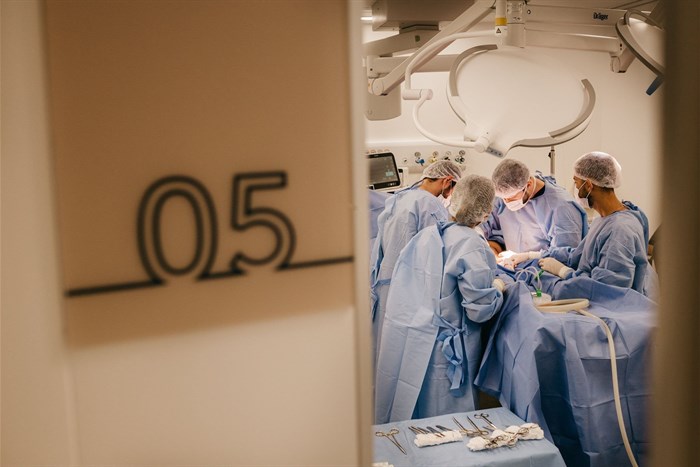
South Africa's operating theatres face a persistent and significant imbalance between surgical demand and available capacity.
In Gauteng alone, 30,600 patients are on the provincial surgical waiting list as of April 2026.
This staggering backlog is aggravated by the reality that emergency cases routinely displace planned procedures, and an extremely high cancellation rate for elective surgical procedures.
Further compounding the challenges is a critical shortage of anaesthetists and a lack of coordination in surgical scheduling among medical teams.
The rate of cancellation of elective surgical procedures (planned procedures that are not emergencies) is significantly higher in South Africa than the globally accepted benchmark of below 5%.
Compounding the scheduling problem at every level is a well-documented shortage of anaesthesiologists in South Africa.
Recent analysis indicates that the country has approximately 2,000–2,100 registered anaesthesiologists, equating to around three per 100,000 people, which is significantly below international workforce benchmarks.
This shortage is further exacerbated by an uneven distribution of specialists between the public and private sectors, with the majority working in private healthcare.
As a result, public hospitals face persistent constraints in accessing anaesthetic expertise, which directly impacts surgical capacity and contributes to delays and cancellations.
But perhaps the most pressing issue is the lack of coordination in surgical scheduling among medical teams, including doctors, hospital scheduling clerks, and anaesthetists.
“The problem is fragmented, manual scheduling processes that prevent the right expertise from reaching the right theatre at the right time,” says Botha van der Vyver, CEO and founder of JustSolve.
“At the centre of many avoidable delays is a visibility problem. No one has real-time visibility of all the players. Surgeons and theatre managers often lack real-time insight into anaesthetist availability.
“Anaesthetists themselves have no central view of their schedules across hospitals and agencies. Matching expertise to patients relies on calls and messaging apps, often under time pressure.
“This means that when a case changes or a slot opens unexpectedly, this process is too slow and too prone to gaps and errors, and these opportunities are lost.
“What was required is a system-level investment in getting more from the capacity that already exists, and that is exactly what we set out to build.”

Digital solution providers like JustSolve work with South African healthcare organisations to replace the fragmented, manual surgical scheduling coordination with integrated digital perioperative scheduling platforms.
These provide real-time visibility into surgeon demand and anaesthetist availability on a single coordinated system that also accounts for specialisation, facility requirements, and geographic reach.
Automated conflict detection, immediate notifications when schedules change, and AI-assisted matching that narrows the time between a scheduling gap appearing and being filled are also included.
“Working inside the system, you see exactly where things break down. It is rarely a shortage of skill or commitment, more often, a shortage of shared information and structured coordination,” agrees Dr John Biggs, founder of Periopp, a surgery scheduling and theatre coordination platform developed in partnership with JustSolve.
Built with input from practising anaesthetists to reflect how scheduling actually happens across hospitals, practices, and agencies, Periopp brings surgical demand and anaesthetist availability into a single coordinated workflow.
Supporting both planned scheduling and urgent case replacement, Periopp’s online booking system enables role-based visibility for clinicians, group practices, agencies, and hospital teams, giving the entire surgical team a shared, accurate view of the schedule, along with real-time SMS and email notifications.
In addition, real-time matching reduces manual effort, closes communication gaps, and produces a more reliable process for filling open theatre sessions - directly reducing underused theatre time and postponed care.
South Africa's staggering surgical backlog — along with the substantial cost thereof and its impact on people’s lives — will not be solved by any single intervention. Infrastructure investment, workforce retention, and equitable resource distribution must all play a role.
“Nevertheless, within the system that exists today, a meaningful share of delays, coordination gaps, and scheduling inefficiencies can be addressed with quality digital and AI platforms," concludes Van der Vyver.
“We are proud to be part of bringing this innovation to the local health industry, because when scheduling is integrated, visible, and coordinated, the same clinical resources deliver better outcomes for more patients, and that is the outcome we set out to achieve.”


