







#Cannes2026 | Jacques Burger: My perspective on Cannes Lions - what to lean into
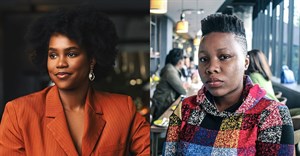
Maybe it was because, for the first time, I got to go up on stage and do a talk rather than simply sit in the audience and soak it all up. It was pretty nerve-racking, but also a massive honour, and a great opportunity to bring a still-underrepresented African perspective to Cannes.

African creativity
Alongside my chief creative officer, Neo Mashigo, we spoke about "What Africa Can Teach the World About Creativity". It is a perspective we naturally feel strongly about. African creativity has often had to do more with less: finding ways through constraints, solving problems the rest of the industry may not see, and making ideas travel without the same levels of budgets, infrastructure or certainty that others take for granted.
That does not make African creativity a special case. It makes it a valuable source of learning. Constraint has a way of forcing clarity, resourcefulness and relevance. In an increasingly uncertain world, those may be some of the most useful creative skills there are.
Maybe Cannes felt different because I saw a repeat of certain themes that now seem to have become standard festival content rather than genuinely new thinking. Although, to be fair, they are often principles we all know and still do not practice nearly enough. Repetition in this instance, has its benefits, I guess. And any antidote to self-imposed, short-termism is welcomed.
Long-term thinking. Brand-building. Meaningful differentiation. Patience. The things that take time and investment, to build and which too often get sacrificed for the next quarter, the next campaign or the next metric.

Maybe it was because, over a casual Father’s Day lunch, without the joy of my children being in Cannes with me, I got to meet Oprah. Not something you can casually drop into a Festival of Creativity recap without sounding like you are trying too hard - but it did happen, and it was one of those surreal moments that reminds you just how strange and extraordinary that week can actually be. She was sitting at the table next to me, and I politely smiled to acknowledge her presence as she was leaving, not imaging her coming over and putting out her hand. I nearly dropped my fork into my steak tartar, but she seemed more interested in the contents of my colleagues Croisette poke bowl.
But perhaps it was none of the above.
New era
Perhaps Cannes felt different this year because it signalled, more strongly than in previous years, that we are at the beginning of an exciting new era in our industry. And none of us really knows precisely what that era may look like.
One of the speakers at Cannes referenced what happened when the camera was invented. At the time, artists considered the ability to paint a highly realistic image one of the pinnacles of artistic achievement. Then photography arrived and suddenly did that better than any painter could.
Photography did not replace artists. But it forced them to reconsider what art was, how it was valued and where they could add something that photography could not. It helped create the conditions for new forms of artistic expression, including Impressionism and Surrealism.
I think we are living through a version of that moment now.
What became more evident at Cannes this year was not simply a concern that AI is going to take our jobs. The deeper concern was around understanding what our jobs actually are, what they need to become, and how they are going to be valued.
There is a lot of talk about being human as our value-add: about combining head, heart and hand; about craft, intuition and emotional connection. And there is truth in that. You can always see it in the care, detail and craftsmanship of some of the best work at Cannes.
But I suspect the value proposition for us humans in a world of AI needs considerably more work than that.
AI can generate mostly competent possibilities at a scale and speed that no creative department can match. It can create routes, images, words, films and variations almost instantly. But it cannot decide which of those options intuitively feels just right.
Right for a brand.
Right for a culture.
Right for a particular moment.
Right for the people we are trying to reach.
Human empathy
That requires judgment. It requires context, cultural understanding, human empathy, experience and the ability to distinguish between what is merely possible and what is genuinely meaningful.
For me, that is where the real human value lies, not simply in producing output, but in making better, wiser and more insightful choices about what should be made, why it matters and what it should mean in the world.
We have spent quite a lot of time trying to define the role of AI, perhaps hoping that if we can put it into a box, it will leave us some space to add value elsewhere. But I fear we have been trying to define a role for a new player while pretending we are still playing the same game, to the same rules, on the same field.
That is a defensive strategy around protecting turf, defending position and justifying existence.
The more important and exciting task is to identify, and where necessary, to rethink where and how we create value.
Real value
For those of us in the business of creativity, brands and communications, that means becoming more valuable not only in what we can produce, but in what we can understand. In what we can interpret. In the questions we ask. In the choices we make. And in the responsibility, we take for the work we put into the world.
Standing on that stage with Neo, making the case for what Africa has to teach the world about creativity, and then watching the industry wrestle with these questions across Cannes, left me truly optimistic.
The uncertainty is real. But so is the opportunity.
And I, for one, am excited to see what we build next.
For more:
- Cannes Lions special section and search
- More info: Google News, Cannes Lions Twitter
- Official site: http://www.canneslions.com, Facebook, Twitter, Instagram