There are occasions when an institution finds itself confronting questions that extend far beyond the programmes it offers or the qualifications it awards. Such moments invite a deeper examination of purpose and responsibility. They compel leaders to look beyond accreditation requirements, curriculum structures, and labour market trends and ask what kind of society is being shaped through education.
They raise questions about citizenship, leadership, and human development itself. Most importantly, they force a reconsideration of the role of the teacher in a world that is changing more rapidly than many institutions can comfortably comprehend.

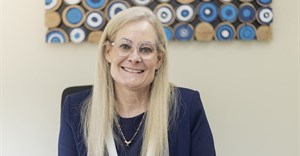
Dr Tercia Botha

Sbongimpilo Mdabe

Solomon Bakare
These questions sit close to the surface in conversation with Dr Tercia Botha, academic programme convenor: Education, Sbongimpilo Mdabe, academic programme manager: Faculty of Humanities (Education), and Solomon Bakare, head of programme: Faculty of Humanities. Although the discussion centres on the launch of Eduvos' postgraduate certificate in education (PGCE), it quickly becomes apparent that the programme represents something more ambitious than the addition of another qualification to an academic portfolio. It reflects a particular view of the future and, perhaps more importantly, of the human being who will be required to navigate it.
Education finds itself at a fascinating crossroads. The traditional relationship between knowledge and authority has shifted dramatically in a remarkably short time. Information that once required hours of research, library visits, or consultations with specialists can now be accessed almost instantly. Artificial intelligence systems can generate essays, produce summaries, answer questions, and perform a growing number of tasks that, until recently, required significant expertise. The landscape in which teachers operate has altered fundamentally.
Yet the consequence has not been a diminished need for teachers. If anything, the opposite appears to be true.
The challenge facing contemporary education is no longer primarily about access to information. Information has become abundant. The more pressing challenge concerns what individuals do with that information. The cultivation of judgement, discernment, critical thought, ethical reasoning, and resilience has become increasingly important precisely because information is now so readily available. In a world where answers are abundant, the ability to ask meaningful questions may prove to be the rarer skill.
This understanding appears to lie at the heart of the Eduvos approach.
For Botha, whose own journey into education was shaped by a belief in the transformative power of teaching, the conversation repeatedly returns to influence rather than instruction. She speaks of former learners who continue to recall lessons and experiences many years after leaving the classroom. The details of a particular lesson may fade over time, but a teacher's impact often remains. Her observation that “a teacher can make or break you” is neither dramatic nor sentimental. It is a recognition of the profound influence educators exercise during formative periods of human development.
Anyone reflecting honestly on their own educational journey will likely recognise the truth of that statement. Most people remember at least one teacher who saw potential before it became visible to anyone else. They remember the teacher who challenged them when they needed challenging, encouraged them when confidence was lacking, or simply offered a sense of belief at a critical moment. Such memories remind us that education is never solely about curriculum delivery. It is equally about possibility.
Mdabe's perspective emerges from a similarly personal foundation. Growing up in a family where teaching was part of everyday life, she witnessed firsthand the role educators play not only in classrooms but also within communities. Her reflections reveal an understanding of teaching that extends beyond academic outcomes. Again and again, she returns to themes of adaptability, resilience, and emotional awareness. The classrooms awaiting today's graduates are increasingly complex spaces. They bring together learners from diverse backgrounds, different family structures, and vastly different social realities. Navigating those complexities requires far more than subject expertise.
Bakare approaches the discussion from another angle altogether. For him, education remains one of society's most effective mechanisms for transformation because it equips individuals with the tools needed to participate meaningfully in the world around them. His reflections carry a strong developmental undercurrent. Education, he suggests, expands human agency. It enables people to move from passive recipients of circumstance to active participants in shaping their own futures. When he remarks that society can hold people accountable once they have been taught, he is pointing to a broader truth about education's relationship to citizenship, responsibility, and social progress.
What makes the Eduvos vision particularly interesting is its refusal to treat technological advancement and human development as competing priorities. Across the world, educational institutions continue to wrestle with the implications of artificial intelligence. Some view it primarily as a threat. Others approach it with caution and uncertainty. Eduvos appears to have chosen a different course. Rather than resisting technological change, the institution is attempting to engage with it directly while insisting that technology remains subordinate to human judgement.
Botha's assertion that Eduvos is 'AI-ready' is significant not because it reflects enthusiasm for technology, but because it reflects confidence in the institution's ability to engage with technological change without becoming captive to it. Throughout the discussion, there is little evidence of either fear or blind optimism. Instead, there is a recognition that artificial intelligence has become part of the educational landscape and that future teachers must understand both its potential and its limitations.
The distinction matters. Technology may provide information, generate content, and support learning processes, but it cannot replace the uniquely human capacities that effective teachers bring into a classroom. Curiosity, empathy, ethical reasoning, intuition, imagination, and wisdom remain stubbornly resistant to automation. The challenge for educators is therefore not to compete with technology, but to nurture those dimensions of human development that technology cannot replicate.
Perhaps nowhere is this philosophy more visible than in the programme's emphasis on emotional intelligence and psychological wellbeing. One of the most compelling themes to emerge during the conversation concerns the emotional burden increasingly carried by educators. Teachers today are expected to perform multiple roles simultaneously. They are instructors, mentors, counsellors, mediators, and often the first adults to recognise signs of distress, trauma, or emotional difficulty in the lives of learners. These responsibilities have expanded significantly, yet support structures for educators have not always kept pace.
The result is evident in rising levels of burnout, emotional exhaustion, and professional fatigue across the sector.
Botha's observation that one cannot pour from an empty cup captures the challenge succinctly. Teachers who are emotionally depleted struggle to provide the stability, encouragement, and guidance that learners require. Recognising this reality, Eduvos has placed considerable emphasis on educational psychology, student support systems, and continuous professional development. Emotional capability is not treated as an optional enhancement to professional competence. It is regarded as one of its essential foundations.
The programme's commitment to adaptability is equally noteworthy. South Africa remains characterised by profound educational inequalities. Some schools enjoy access to sophisticated digital infrastructure and extensive resources. Others continue to confront overcrowded classrooms, limited connectivity, and severe resource constraints. Preparing teachers exclusively for one reality or the other would leave them inadequately equipped for the diversity of environments they are likely to encounter.
Eduvos has therefore designed practical experiences that expose student teachers to a range of educational contexts. The intention is not merely to familiarise students with different environments, but to cultivate the capacity to remain effective across them. Adaptability, in this sense, becomes more than a professional skill. It becomes a leadership quality. Indeed, one could argue that adaptability represents one of the defining competencies of contemporary leadership.
Whether in education, business, government, or civil society, the capacity to respond to uncertainty without losing sight of core values has become increasingly important. The future remains impossible to predict with precision. New industries will emerge, existing professions will evolve, and technologies not yet imagined will alter how societies function. Amid such uncertainty, adaptability anchored in principle may prove to be one of the most valuable human attributes.
Perhaps this explains why the conversation with Botha, Mdabe and Bakare ultimately feels less like a discussion about a teacher qualification and more like a reflection on society's future trajectory. Each of them appears acutely aware that the classroom occupies a unique position in the national story. Every engineer, entrepreneur, artist, scientist, parliamentarian and community leader begins as a learner sitting before a teacher. Long before innovation, there is education. Long before leadership, there is learning. Long before national progress becomes visible, there is often an educator helping a young person recognise possibilities they had not yet imagined for themselves.
The significance of the Eduvos PGCE, therefore, lies not solely in the qualification it offers but in the vision that informs it. It is a vision rooted in the understanding that while technologies will change, economies will evolve, and professions will come and go, the future will continue to be shaped by human beings. Those human beings will require educators capable of nurturing critical thought, ethical judgement, imagination, and courage. They will require teachers who understand both technology and humanity, and who know the difference between information and wisdom.
Viewed through that lens, the work being undertaken by Dr Tercia Botha, Sbongimpilo Mdabe and Solomon Bakare extends well beyond the preparation of future educators. It concerns the preparation of those who will, in turn, prepare future generations. In a society confronting profound social, economic and technological transitions, that may be one of the most important investments that any institution can make.
First published in PMR Africa.