The most consequential conversations in higher education today are no longer primarily about lecture halls, qualifications, or even technology. They are about people. They are about the kind of human beings institutions are helping to shape in a world marked by technological disruption, economic uncertainty, social fragmentation, and growing questions about what it means to live a meaningful life.
As artificial intelligence reshapes industries and mental health challenges increasingly affect young people, higher education institutions are being compelled to rethink their purpose. The question is no longer simply whether graduates possess knowledge. The question is whether they possess the resilience, adaptability, empathy and confidence required to navigate a world that refuses to stand still.

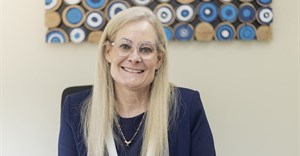
Dr Miné de Klerk, dean: Curricula and Research, and Cheryl Smith, head: Student Affairs and Student Support at Eduvos
These themes emerged repeatedly during conversations with Dr Miné de Klerk, dean: Curricula and Research at Eduvos, and Cheryl Smith, head: Student Affairs and Student Support. Although their responsibilities occupy different parts of the institution, both articulate a vision of higher education that extends far beyond employability statistics and academic performance indicators. At its heart lies a conviction that education is fundamentally about human development and that institutions have a responsibility not merely to graduate students, but to help shape citizens capable of making meaningful contributions to society.
Both leaders trace this philosophy back to personal experience. Reflecting on her student years, Dr De Klerk recalls a sociology lecturer whose teaching was rooted in what he called a pedagogy of discomfort. Students from across disciplines crowded into his classes because he created a space where difficult conversations could occur safely and where assumptions were constantly challenged. Looking back, she describes those experiences as transformative because they revealed something fundamental about learning itself. “If it’s not discomforting and it doesn’t challenge you,” she reflects, “it’s never going to stay with you.”
Cheryl Smith’s reflections are equally revealing. Having worked across public education, technical and vocational education and training, and higher education, she speaks passionately about the role education can play in transforming lives. “What is the impact that I can make as a mother, as an educator, as a person on a student’s life?” she asks. “Because it’s so much more than just an academic journey.”
That perspective is particularly relevant when considering the realities confronting students today. Economic uncertainty, social media, mental health challenges, and rapidly changing technologies have created a vastly different environment from that experienced by previous generations. Dr De Klerk notes that contemporary students are entering adulthood at a time when many traditional markers of certainty have disappeared. They are also acutely aware of living in a world where their actions, opinions, and private moments are often permanently visible. “We know Generation Z already feels extremely surveilled,” she observes. The result is a generation that often appears simultaneously connected and isolated, ambitious and anxious.
Against this backdrop, both leaders argue that traditional definitions of student success have become inadequate. Academic achievement remains important, but it is no longer enough. Success must be understood more holistically.
For Smith, genuine success is reflected in the development of a student on their journey to become a global citizen. “Qualifications are important, but I need to positively interact with the world around me. I must not only develop myself but my whole community.”
This philosophy is reflected throughout the Eduvos student experience. Rather than viewing access simply as admission, the institution understands it as a continuing process that includes support, belonging, engagement, and successful completion. “Real access,” says Dr De Klerk, “is enabling them to continue and complete their studies and then hopefully be successful thereafter.”
Such an approach requires institutions to recognise the broader realities shaping student lives. Financial stress, family responsibilities, emotional challenges, and mental health concerns cannot be treated as peripheral issues because they directly affect academic performance and personal wellbeing. As Smith puts it: “If you do not support a student socially, mentally and physically, it may have a negative impact on the student’s journey and student retention.”
This recognition has informed one of Eduvos’ most significant innovations: its integrated at-risk monitoring and tracking system. Drawing information from multiple points across the student journey, the system identifies early warning signs and enables targeted interventions before challenges become crises. Every student is supported through dedicated Student Affairs Advisors, wellness educators, peer mentors, wellness ambassadors and professional counselling services. The result is a support ecosystem designed not simply to respond to difficulties, but to cultivate resilience and wellbeing.
Belonging sits at the centre of this approach. Dr De Klerk references the influential work of educational researcher Vincent Tinto, whose studies consistently demonstrate that students are more likely to persist and succeed when they feel connected. “Students tend to stay, and they tend to learn when they feel they belong,” she says.
This insight helped shape the Eduvos Social House model, which creates smaller communities within the broader institution where students can build relationships, participate in activities, and assume leadership responsibilities. The initiative provides students with a sense of identity, connection, and ownership while simultaneously creating opportunities for personal growth.
“Students want to feel valued,” Smith explains. “They want to feel appreciated beyond the classroom.”
Leadership development is woven throughout this model. Students are encouraged to participate in representative councils, governance structures, peer mentoring initiatives, and a range of leadership opportunities that help them develop confidence, communication skills, and a sense of responsibility.
At the academic level, a similar commitment to future readiness is evident. Dr De Klerk argues that institutions can no longer prepare students for a single profession or a predictable career trajectory. Instead, educational programmes must focus on building transferable capabilities that allow graduates to adapt continuously. “We know we’re not preparing them for a single job,” she says. “We’re trying to build interdisciplinary skill sets and practical application as much as possible.”
This philosophy is reflected in Eduvos’ emphasis on work-integrated learning, industry partnerships, simulations, practical projects and authentic assessments. These experiences help students connect academic knowledge to real-world challenges while developing the interpersonal and behavioural capabilities increasingly valued by employers.
Perhaps the most revealing insight emerges when Dr De Klerk reflects on her doctoral journey. Rather than expanding her sense of expertise, she says, it deepened her humility. “The one thing you learn with a PhD is the fact that knowledge is vast and your contribution is tiny.” Yet it is precisely that small contribution that matters because it is useful, authentic, and connected to something larger than oneself.
That observation provides a fitting conclusion to understanding the educational vision emerging from Eduvos. Success is not ultimately measured by titles, salaries, or status. It is measured by the capacity to make a meaningful difference within one’s workplace, community and society. The institution’s aspiration is therefore not simply to produce graduates who can secure employment, but graduates who understand their agency, recognise their responsibilities and possess the confidence to engage constructively with a complex world.
As higher education institutions around the globe grapple with questions of relevance and the implications of artificial intelligence, Eduvos appears to be advancing a deeply human vision. It is a vision grounded in belonging, strengthened through leadership, sustained by support, and ultimately directed towards contribution. In that sense, its most important work may not be preparing students for their first job after graduation. It may be preparing them for the lifelong task of becoming fully human in a world that increasingly demands nothing less.
By PMR Africa.