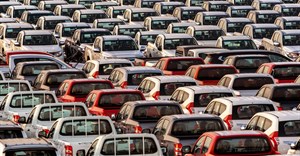
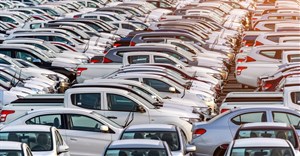
South Africa's new vehicle market continued its strong run in August, with sales rising 11.4% year-on-year to 57,898 units, while new energy vehicle (NEV) adoption continued to accelerate.
Passenger car sales increased 11.6% to 41,216 units, up from 36,947 in August 2025, while sales of new light commercial vehicles, including bakkies and minibuses, rose 11% to 13,727 units.
Commercial vehicle market also grows
Medium commercial vehicle sales increased 16.3% year-on-year to 805 units, while heavy trucks and buses increased 10.1% to 2,150 units.
Despite the broader market growth, vehicle exports declined 11.9% to 35,091 units, down from 39,833 units in August 2025.
The National Association of Automobile Manufacturers of South Africa (naamsa) said the export decline highlighted the need to strengthen the industry's competitiveness and convert growing domestic demand into local production, localisation, investment and employment.
NEV adoption accelerates
NEV sales continued to gain momentum, with 3,096 units sold in July 2026, more than double the 1,506 units sold in July 2025.
Year-to-date NEV sales reached 16,289 units, an 88% increase compared with the corresponding period in 2025. This is already equivalent to 97.5% of total NEV sales recorded during all of 2025.
The year-to-date total comprises 8,078 hybrids, 5,851 plug-in hybrids and 2,360 battery electric vehicles.
Plug-in vehicles accounted for 54.4% of NEV sales during July, according to naamsa.
The association said the figures showed that South African consumers were adopting multiple electrification technologies, while electrified commercial vehicles were also beginning to emerge across light, medium and extra-heavy applications.
Demand supported by economic conditions
Naamsa said moderating inflation and stable interest rates provided some support for vehicle demand in August.
Headline consumer inflation moderated to 4.3% in July from 5% in June, while the South African Reserve Bank maintained the repo rate at 7%, with the prime lending rate at 10.5%.
However, higher fuel costs continued to put pressure on commercial operators. The General Fuel Levy added R1.50 per litre to petrol and R1.96 per litre to diesel from 1 July, while wholesale diesel prices increased further during August.
Naamsa said the contrasting cost pressures facing private motorists and commercial operators highlighted the growing importance of fuel efficiency, total cost of ownership and technology choices when purchasing vehicles.
The association said the next phase of growth would depend on South Africa's ability to convert domestic demand into greater local manufacturing, component production, investment, skills development and employment.