Public debate around South Africa's Electric Vehicle (EV) White Paper has largely centred on how quickly motorists will adopt electric vehicles. In doing so, it overlooks the policy's primary purpose.
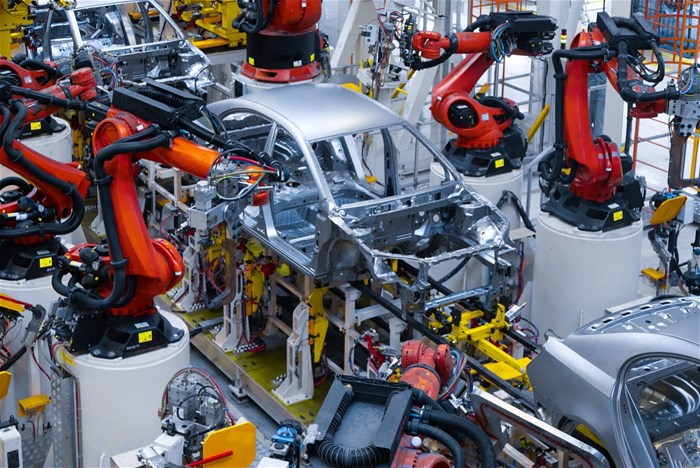
The White Paper is fundamentally an industrial strategy designed to preserve South Africa's automotive manufacturing base, protect export competitiveness, and secure investment as the global industry transitions towards new energy vehicles (NEVs).
Viewed through this lens, the policy is less about encouraging consumers to buy electric cars and more about ensuring that South Africa remains a competitive participant in global automotive value chains. The real challenge is not domestic EV adoption; it is preserving the country's position as a globally competitive manufacturing and export hub.
The export challenge
The automotive industry remains a cornerstone of South Africa's manufacturing output, export earnings and GDP. The scale is worth stating plainly: South African manufacturers exported 404,191 vehicles in 2025, the highest export volume recorded since 2007. Maintaining access to international markets is therefore essential to sustaining manufacturing output, export earnings and valuable foreign exchange inflows.
The European Union and the United Kingdom are the primary destinations for local vehicle exports, and both are tightening emissions regulations as they accelerate the transition towards battery electric, plug-in hybrid and hybrid models.
As demand for internal combustion engine vehicles structurally declines in these markets, South Africa's automotive industry faces an important strategic challenge. Without adaptation, the country risks a gradual erosion of export competitiveness and global market share.
Investment depends on policy certainty
The risk extends beyond exports. Future vehicle production platforms and assembly mandates are increasingly allocated to countries that demonstrate clear electrification strategies, supportive policy environments and investment readiness.
As global manufacturers shift investment towards unified NEV platforms, South Africa must remain an attractive destination for future production programmes.
The local automotive industry has already begun investing in this transition through factory upgrades, production line modifications, supplier development programmes, and investment in land, buildings and supporting infrastructure. These investments strengthen industrial capability, but policy certainty remains equally important.
Automotive investment decisions are made years in advance, and predictable policy frameworks are essential for securing future production allocations.
Protecting an industrial ecosystem
The industry's economic contribution extends well beyond vehicle assembly plants. It supports a broad ecosystem of component manufacturers, logistics providers, dealerships, vehicle finance companies and aftermarket services.
Collectively, automotive manufacturing and motor trade-related activities support more than 500,000 jobs. Protecting South Africa's automotive exports therefore means protecting an entire industrial ecosystem.
A battery value chain opportunity
There is also an opportunity that extends beyond trade. South Africa possesses substantial reserves of the raw minerals that are essential inputs into battery production and electric mobility supply chains.
Expanding local processing, battery-related manufacturing and component production would increase domestic value addition, strengthen the link between mining and manufacturing, and shift the economy beyond exporting raw minerals towards higher-value industrial production.
Global trends reinforce the case
Global trends reinforce why the transition matters. Electric vehicle sales reached 21.2 million units in 2025, with China alone accounting for 13.3 million units, or almost two-thirds of global sales.
China's dominance reflects decades of coordinated industrial policy, integrated supply chains and manufacturing scale. Europe remains the world's second-largest EV market, contributing 20.3% of global sales, supported by consistent regulation and long-term policy certainty.
The United States, by contrast, saw more subdued growth in 2025, demonstrating how policy uncertainty can influence private-sector investment decisions and demand dynamics.
Meanwhile, emerging markets including India, Thailand, Indonesia and Brazil are showing that well-designed industrial strategies can accelerate EV manufacturing and adoption even at lower income levels.
The lesson is clear: in capital-intensive industries with long investment horizons, policy predictability matters as much as technology.
Consumer adoption will take time
Domestic consumer adoption, however, is likely to remain gradual. Affordability pressures, limited public charging infrastructure and high electricity costs continue to pose significant challenges.
Given South Africa's fiscal constraints, widespread direct government subsidies for consumers remain unlikely. Instead, local demand is likely to be shaped by market-based mechanisms, with hybrid vehicles serving as an important transitional technology.
Vehicle finance institutions are also likely to play an increasingly important role by developing financing solutions, managing residual value risk and improving affordability as technology evolves. Over time, declining battery costs, greater model availability and increased competition should further support adoption.
Execution will determine success
Judging the EV White Paper purely by domestic EV sales therefore tells only part of the story. Its primary purpose is to safeguard South Africa's industrial competitiveness during one of the most significant transformations in the global automotive industry in more than a century.
The greater risk facing South Africa is not slow consumer adoption of electric vehicles. It is that global manufacturers allocate future investment and production to countries better positioned for the transition.
Preserving manufacturing jobs, sustaining export volumes and earnings, and continuing to attract long-term investment will determine whether South Africa retains its place in global automotive value chains.
The White Paper provides the strategic framework. The challenge now is execution. In the global competition for automotive investment, policy ambition alone is not enough; competitiveness must ultimately be demonstrated through implementation.