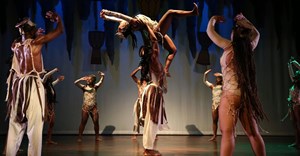
Cape Town’s public spaces will become performance venues this October as the Institute for Creative Arts (ICA) brings its eighth Live Art Festival to streets, gardens and cultural sites across the city.

Image by Itai Zwecker, courtesy of TRIBE
Running from 14 to 18 October 2026, the festival will present around 30 free performances and installations, spanning dance, theatre, visual art, music, architecture and performance.
The programme is designed to move art beyond conventional venues, using the city itself as part of the experience. Much of the work is site-specific, responding to the histories, communities and physical characteristics of the spaces in which it is presented.
For the creative economy, the approach also positions public art as a way of activating existing urban spaces and connecting cultural programming with broader audiences.
Turning the city into a venue
Eight routes will connect festival sites including Hiddingh Campus, the Company's Garden, the Iziko Amphitheatre, Station Forecourt, St George’s Mall, the Castle, 16 on Lerotholi Gallery and Guga S’thebe.
“Every site on the programme has its own rhythm, its own audiences, its own histories,” says ICA director, Professor Nomusa Makhubu.
“The work is about listening to that context first and letting the art respond to what's already there.”
The distributed format means audiences can experience the festival as a journey through the city rather than attending a single venue. It also opens the programme to people who may not typically participate in formal arts spaces.
A platform for South African artists
The festival is curated by Themba Stewart and Luvuyo Equiano Nyawose, with a programme bringing together artists and practitioners from different disciplines.
Confirmed participants include Vincent Mantsoe, Mandla Mbothwe, Mwenya Kabwe, Gavin Krastin, Auriol Hays, Qondiswa James, Wezile Harmans, Oupa Sibeko, Lungiswa Plaatjies, Meghna Singh, Sbo Ndaba Dance and Wolff Architects.
The mix of disciplines reflects live art’s position between established creative categories, while the site-specific format gives artists an opportunity to develop work in direct relationship with audiences and place.
Building international creative exchange
The 2026 edition also introduces an exchange between South Africa and Sweden, creating an international dimension to the festival's artist development programme.
Swedish live artist Mauritz Tistelo will join the Cape Town programme and collaborate with local artists, while South African dancer Lorin Sookool takes up a reciprocal placement in Sweden.
“Lorin's placement in Sweden matters just as much as Mauritz's time here,” says Makhubu. “What our artists bring back is as valuable as anything an international guest contributes on-site.”
The exchange positions the festival not only as a platform for presenting work, but also as a mechanism for building longer-term international relationships and opportunities for artists.
Art, solidarity and fragile democracies
Critic and writer Aruna D'Souza will deliver the festival's keynote address.
Her 2024 book, Imperfect Solidarities, examines artistic practices that build solidarity without requiring different identities or communities to be absorbed into one another.
At the festival, D'Souza will bring those questions into dialogue with artists and collectives working in environments shaped by social unrest and fragile democracies.
The keynote adds a critical dimension to a programme that is otherwise rooted in physical encounters between artists, audiences and public spaces.
Free access broadens the audience
A central feature of the festival is that all performances are free.
That removes one of the most immediate barriers to arts participation and allows the festival to reach audiences beyond Cape Town’s established theatre, gallery and performance communities.
Because the work takes place in public spaces, audiences can also encounter performances without having planned to attend them.
A commuter may encounter an installation at Station Forecourt, a visitor may come across a performance in the Company’s Garden, while the Sunday programme in Langa places the festival directly within another community context.
For the creative sector, this model demonstrates how cultural events can use existing public infrastructure to expand audience reach without relying exclusively on traditional ticketed venues.
A city-wide cultural programme
The ICA Live Art Festival runs from 14 to 18 October 2026, with programming across Cape Town and a Sunday programme in Langa.
With around 30 free performances and installations, the festival is positioning the city itself as both venue and participant — connecting contemporary art with public space, international exchange and audiences who might otherwise remain outside the traditional arts ecosystem.