Newly analysed baseline data from the Commission for Employment Equity (CEE) has revealed that designated employer reports fell by 48.4%, from 29,269 to 15,090. While the decline may be expected under the amended definition of a designated employer, which now applies to employers with 50 or more employees and no longer uses annual turnover as an additional threshold, it should not be mistaken for reduced employer responsibility.

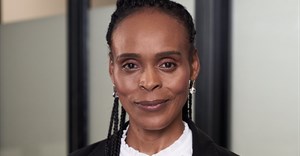
John Botha, joint-CEO Global Business Solutions
“This is the baseline from which five-year sectoral numerical targets will now be pursued,” says John Botha, joint-CEO of Global Business Solutions (GBS), a labour law, transformation and workplace advisory firm.
“Employers cannot assume the targets have gone away because litigation is under way. Section 53 of the EEA now links a company’s ability to do business with the state directly to its EE compliance status. Employers who fall silent on reporting, or cannot show reasonable progress, place government contracts and competitiveness at risk.”
A hardening glass ceiling
The data points to a workforce pipeline that appears to function better at entry and mid-career level, but narrows sharply at the point of promotion into senior leadership.
African and female representation is at, or closer to, national Economically Active Population (EAP) parity at skilled and professionally qualified levels. However, White representation remains 57.1% at top management and 44.1% at senior management, up to seven times the White EAP share.
African representation falls to less than half of its EAP share at both levels, while female representation drops from near-parity in the professional ranks to only 29.3% at Top Management.
“This is not simply a recruitment problem. It is a retention, promotion and succession problem,” says Botha.
“Employers who focus transformation spend purely on graduate intake will not shift these numbers. The blockage sits at the transition into leadership, and that requires succession planning, sponsorship and board-level accountability.”
Melissa Cogger, Talita Laubscher, and Chloë Loubser 27 May 2025 Disability inclusion remains stalled
Representation of employees with disabilities remains flat at 1.3% of the total workforce, identical across the private sector and government, and well below the 3% five-year sectoral target across all 18 economic sectors.
Botha says this shows that disability inclusion is still being treated too narrowly by many employers.
“Disability inclusion cannot sit only in a report. It requires accessible recruitment, reasonable accommodation, manager training and a workplace culture where employees feel safe to disclose disability without fear of career consequences,” he says.
Litigation has not suspended compliance
Six major court challenges to the Employment Equity Amendment Act, 2022 and its five-year sectoral numerical targets remain unresolved. These include challenges brought by the Democratic Alliance, Neasa and Sakeliga, Solidarity, Busa and the Security Association of South Africa.
To date, no interim relief has suspended implementation of the amended framework, and GBS says designated employers should continue to treat the current legal position as binding for compliance purposes pending the outcome of litigation.
The CCMA also recorded 2,577 unfair discrimination referrals under the EEA between April 2025 and January 2026, two-thirds of which were brought on “arbitrary grounds”.
According to GBS, this reflects ongoing employee difficulty in linking workplace grievances to a listed ground under the Act, while also signalling that employers should review promotion, discipline, pay and workplace culture in practice.
Call for urgent employer focus
Botha urges designated employers to audit senior-level succession pipelines, review disability inclusion strategies and ensure that EE plans are supported by evidence of reasonable progress.
“The employers who get ahead of this now, rather than waiting for the courts, will be best placed to retain their EE compliance certificates, protect state-linked business and build leadership teams that reflect South Africa’s available talent,” concludes Botha.