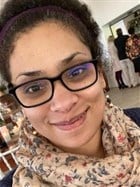
Talintha-Lee de Kock's career took an unexpected turn after she studied BCom Accounting and realised she wanted a more hands-on, fast-paced environment where she could see the impact of her work.

Source: Supplied | Talintha-Lee de Kock, Team Leader: Warehouse and Inventory, B-well
She entered the supply chain environment at Distell and discovered a passion for understanding how everything connects, from numbers and stock to the warehouse, production, transport and ultimately the customer.
Today, she leads the raw materials warehouse team at B-well and works with external warehouse partners, with a focus on smooth operations, stock management, process improvement and communication across teams.
For Women's Month, Bizcommunity caught up with De Kock about her move from accounting into supply chain, lessons from more than a decade in warehouse operations, leading teams, creating opportunities for women and the changing role of technology in the sector.
You studied BCom Arccounting before moving into supply chain and logistics. What first drew you to the industry, and what made you decide to build your career in this field?
To be honest, studying BCom Accounting was not always part of my plan. In my second year, I wanted to give up. I remember my dad telling me, “If you do that, you have to pay everything back.” Those words stuck with me, and they motivated me to push through and complete my degree.
I eventually realised that although I had studied accounting, I didn't necessarily want to spend my career sitting behind a desk. I wanted something more hands-on, fast-paced, and where I could see the impact of my work.
That is what eventually led me into supply chain and logistics. I found that I really enjoyed understanding how everything connects from the numbers and stock to the warehouse, production, transport and ultimately the customer.
Looking back now, I think my accounting background has actually been a great advantage in supply chain because I understand both the operational side and the financial impact of the decisions we make.
With more than 10 years of experience in warehouse operations, inventory management and process improvement, what have these roles taught you about solving problems and improving the way operations work?
With more than 10 years of experience in warehouse operations, inventory management and process improvement, I have learned that solving problems is not just about fixing the issue in front of you, but understanding why it happened in the first place.
I have learned to look at the bigger picture, work with the people involved, and use data and systems to identify the root cause. In warehouse operations, small mistakes can have a big impact on stock accuracy, costs and customer service, so I believe in putting processes in place that prevent the same problem from happening again.
My experience has also taught me that continuous improvement does not always require a major change.
Sometimes it is about making a small adjustment to a process, improving communication between teams, or simply making sure everyone understands their responsibility. Most importantly, I have learned to stay calm under pressure, take ownership of problems and always look for a practical solution that improves the operation in the long term.
Supply chain and warehouse environments have traditionally been male-dominated. What has your experience been as a woman in this space, and how has it shaped the way you have approached your career?
Being a woman in a traditionally male-dominated industry has had its challenges, but it has also shaped me into the person I am today. I have learned that you do not need to be the loudest person in the room to make an impact. You need to know your work, stand by your decisions and be willing to take responsibility.
I have learned to lead through respect, consistency and accountability. I believe that good leadership is not about whether you are male or female; it is about how you treat people, how you handle pressure and whether your team can trust you to make the right decisions.
Being a woman in this industry has therefore made me more determined, resilient and confident. It has also shown me that there is a place for women in supply chain and warehouse operations, and I hope my career can encourage other women to see the opportunities available to them.
You now lead the raw materials warehouse team and work with external warehouse partners. What have you learned about leading people and keeping different teams aligned?
Leading the raw materials warehouse team and working with external warehouse partners has taught me that communication and relationships are just as important as the processes themselves.
You can have the best systems and procedures in place, but if people are not aligned and communicating, the operation will still struggle. I have learned to be clear about expectations, follow up consistently and make sure everyone understands how their role affects the bigger supply chain.
Working with external warehouses has also taught me that you need to build relationships based on trust but still hold people accountable for the service and standards that are expected.
I believe in being hands-on and approachable. I want my team to know that they can come to me with a problem, but I also expect them to take ownership of finding solutions. For me, keeping different teams aligned comes down to clear communication, accountability, teamwork and making sure everyone is working towards the same goal.
What practical changes can businesses make to create greater opportunities for women to enter and progress in operational and leadership roles within supply chain and logistics?
I think businesses need to start by creating opportunities based on ability, potential and performance rather than gender. Women should be given the same opportunities to learn, take on responsibility and prove themselves in operational environments.
Companies need to challenge the perception that warehouse and logistics roles are only suited to men. There are many different skills required in this industry, including problem-solving, planning, communication, attention to detail and leadership.
Women need to see other women in senior operational positions. Representation makes a difference. When women can see that it is possible to build a successful career in supply chain and logistics, they are more likely to believe that they can do it too. For me, the biggest change is simply to give women a seat at the table, give them the opportunity to prove themselves, and then support them as they grow.
You describe taking ownership, continuous learning and stepping outside your comfort zone as important to your journey. How have these principles influenced the opportunities you have pursued?
Taking ownership, continuously learning and stepping outside my comfort zone have played a big role in my career. I have always believed that if an opportunity comes my way, I should be willing to learn, take responsibility and give it my best.
There have been many situations where I was not necessarily the most experienced person in the room, but instead of being afraid of that, I saw it as an opportunity to learn. I have taken on responsibilities that challenged me because I knew they would help me grow, both professionally and personally.
Taking ownership has also taught me not to wait for someone else to solve a problem. If I see something that is not working, I want to understand it, find a solution and improve the process. Sometimes that means asking difficult questions or making decisions that are outside my comfort zone. I also believe that learning never stops.
Looking back, some of the opportunities that have had the biggest impact on my career were the ones that initially felt uncomfortable. Stepping outside my comfort zone has helped me discover what I am capable of and has given me the confidence to take on bigger challenges.
Supply chain and logistics are evolving alongside new technologies and changing operational demands. What opportunities do you see for women as the industry continues to evolve?
I think the evolution of supply chain and logistics creates more opportunities for women than ever before. Technology is changing the industry, and it is no longer only about physical operations. Data, automation, systems, analytics, planning and process improvement are becoming increasingly important.
I see a lot of opportunities for women in areas such as supply chain planning, inventory management, process improvement and operational leadership. These areas require strong problem-solving, attention to detail, communication and the ability to work with different teams.
Technology can also help create a more inclusive working environment. As more processes become automated and data-driven, success is increasingly based on knowledge, decision-making and leadership rather than physical strength.
I believe women should embrace these changes by being willing to learn new technologies, understand the data behind their operations and continuously develop their skills. The future of supply chain is about being adaptable, and I think women have a huge opportunity to play a leading role in that future.
As South Africa marks Women’s Month, what advice would you give young women considering careers in supply chain, warehousing or logistics, and what progress would you like to see for women in the sector?
I would say don't let the fact that an industry is male dominated convince you that you don't belong there. Supply chain and logistics need different perspectives, and women have an important role to play in these industries.
Don't wait until you feel 100% ready before you put your hand up for an opportunity. Take the opportunity, learn, ask questions and make it work.
And remember, you are never too old to learn. Take every opportunity that comes your way. You might not know exactly where it will lead, but you will learn something from the experience.
Most importantly, don't be afraid to make mistakes. Some of the biggest lessons in my career have come from situations that didn't go according to plan.
Your career is a journey. Keep learning, keep growing and don't put limitations on yourself because of what you think you are capable of.