Home food gardens are helping households improve food security and supplement their incomes as rising living costs continue to place pressure on family budgets, according to rural development non-profit organisation Thanda.
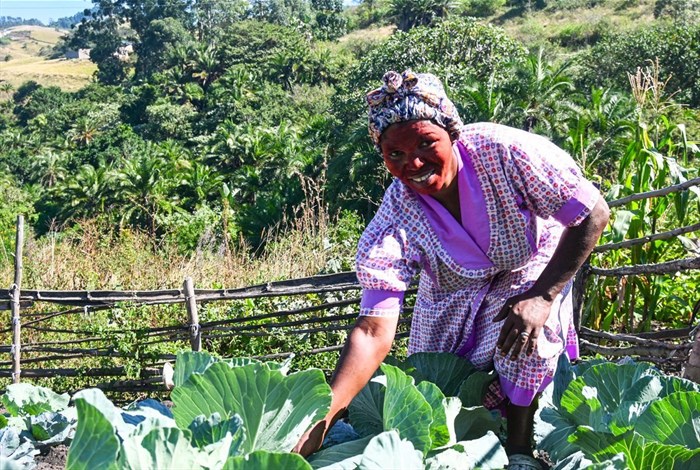
Source: Supplied: Zandile Shinga working in cabbage garden on her plot in ePlazini, rural KwaZulu-Natal.
The organisation says its Household Gardening Programme, launched in 2022, equips families with low-cost regenerative farming techniques to improve access to nutritious food while reducing dependence on purchased produce.
One participant, 51-year-old Zandile Shinga from ePlazini in rural Mtwalume, recently earned R1,250 in a week by selling surplus green peppers and chillies grown in her garden.
"Farming has helped me become independent," said Shinga, who joined the programme in 2023. "The garden feeds my family, and when I have extra produce to sell, I can earn money for things my daughter needs, like school uniforms and stationery. It has made a real difference in our home."
Thanda says the programme also teaches participants regenerative practices such as composting, mulching and seed-saving to help reduce production costs and improve long-term sustainability.
Supporting household food security
The organisation says rising food prices are placing increasing pressure on low-income households, with families often forced to reduce the quality and diversity of their diets when budgets are stretched.
It warns that poor nutrition during the first 1,000 days of a child's life contributes to stunting, which is estimated to affect one in four South African children.
"Prevention begins long before a child enters a classroom," said Angela Larkan, executive director and co-founder of Thanda. "When households have steady access to diverse, nutritious foods, they are better able to support healthy pregnancies and early childhood development. But when household budgets stretch to the limit, families often have zero room left to absorb market shocks. Home-grown food is no longer a hobby; it is a critical necessity for survival."
Building resilience through home gardening
According to Thanda, more than 650 household gardeners have been trained to grow vegetables and protein-rich foods while using low-cost methods to manage pests and improve soil health.
"Too often, food gardens are viewed solely through an agricultural lens, but their impact is entirely social and economic," said Larkan. "When a household grows its own food, they are no longer entirely dependent on cash to survive an unstable economy. At-home food production, whether in a rural homestead or a small container garden, offers a practical way to reclaim agency."
The organisation is calling for greater support for household food production as a way to strengthen food security and improve resilience against future economic pressures.