





VML Birdwatching at the Loeries | The Loeries a great stage for SAT
Danette Breitenbach


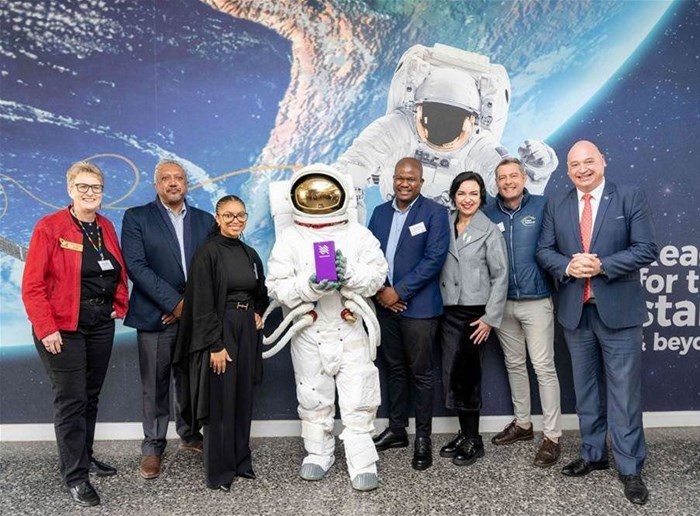
The Rooibos in Space programme, conceptualised by the South African Rooibos Council (SARC) and delivered in collaboration with MaxIQ Space and the South African National Space Agency (Sansa), connects local agricultural heritage with international research on sustainable food systems for future space exploration.
The project officially launched at Parklands College’s Innovation Centre in Cape Town, bringing together representatives from government, academia, education, agriculture, and the space sector.
The core of the initiative involves sending the indigenous Rooibos seeds to orbit for several weeks. Upon their return to Earth, the seeds will be planted in comparative trials to monitor germination, growth rates, yield, and overall resilience.
Learners from seven schools in the Cederberg region—the natural home of Rooibos—will conduct the primary experiment in partnership with local farms. A parallel experiment at Parklands College will provide additional data for the comparative study.
According to Dawie de Villiers, director of the SARC, the project connects traditional agriculture with forward-looking research:
“Rooibos has long been part of South Africa’s agricultural heritage. This project places it within a broader scientific context, where plant biology, space research and education intersect. It also reflects the importance of investing in scientific literacy and skills development for the next generation of researchers and innovators.”
In addition to the practical experiment, participating schools will take part in an extended Stem education curriculum covering space science, plant biology, and sustainable agricultural systems.
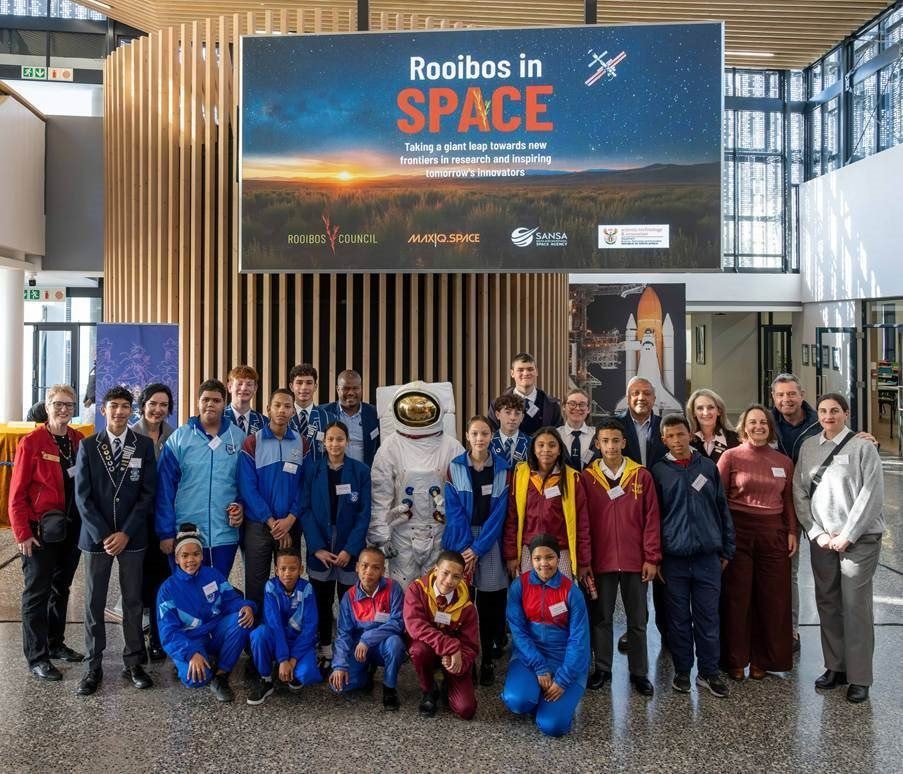
The initiative aims to build practical technical skills by giving students direct access to space-based experimental data. Learners will also be invited to design the official Rooibos in Space mission patch during July and August.
Judi Sandrock of MaxIQ Space highlighted the value of giving learners exposure to actual research methodologies:
“The value of this project lies in giving learners exposure to real research processes linked to space science. It provides a structured opportunity to develop scientific thinking, data analysis skills and an understanding of how experimentation works in practice.”
The project forms part of a wider global interest in space-based plant research, driven by long-duration missions like Nasa’s Artemis programme. Previous experiments aboard the ISS have successfully grown crops like lettuce, peas, and soybeans to study plant responses to gravity and environmental stress.
Thandile Vuntu, science engagement manager at Sansa, noted that integrating space science with primary industries like agriculture supports national developmental objectives:
“Space science is becoming more integrated into areas that affect daily life, from communications to environmental monitoring. Initiatives such as this help build awareness of the skills required for future participation in the sector, but also align with national priorities around skills development, innovation capacity and strengthening South Africa’s position in emerging scientific fields.
"They further highlight the importance of collaboration between industry, government, academia and the science sector in building a strong pipeline of future scientists, engineers and researchers.”


