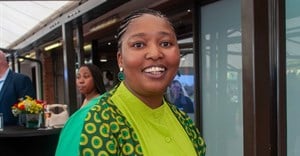
Dedicated to empowering the next generation of readers and leaders, Maru Maphiri Group founder and entrepreneur Keamogetswe Matsho says the organisation is a culmination of two things she has loved for as long as she can remember: writing and business.

Keamogetswe Matsho, author, entrepreneur and founder of the Maru Maphiri Group
With an aim to bridge critical learning gaps by delivering culturally relevant stories that are both engaging and transformative, the educational publishing and literacy organisation introduces children to financial literacy and entrepreneurship through storybooks aimed at children aged 9 and up.
“At the heart of the business is Maphiri, a young South African girl who is ambitious, curious and still figuring things out. Through her, we can have conversations about money and decision-making in a way that feels familiar to children,” explains Matsho, author of the Maphiri series of books and chairwoman of the Maphiri Foundation.
“For me, encouraging children to read is central to all of this. I want a child to enjoy the story, see something of themselves in it and start thinking, ‘I could do that too.’ That is the kind of business I am building.”
At 35, Matsho draws on her own 14 years of business experience to create Maphiri's world. Matsho's career spans both private and industrial sectors, and she has served in several C-suite positions. Aside from her role at the Maru Maphiri Group, she is currently managing director of Lamont Group, as well as an executive director at Cebekhulu Construction.
Here Matsho talks to Bizcommunity further about the inspiration and long-term vision for the Maru Maphiri Group, as well as her experience being selected as a Woolworths Youth Maker for 2026.
What was the inspiration behind Maphiri's Marvellous Money Moves?

Maphiri's Marvellous Money Moves | Image supplied
As a young girl, I knew I wanted to be a writer and a wealthy businesswoman. I loved stories, and I was also interested in making my own money. Maphiri brings those two parts of me together.
My experience in business has also shaped the questions I want children to start asking earlier: How do I turn an idea into something useful? What does it cost? What happens when things do not go according to plan? Those are conversations we can have long before a child earns their first salary.
I wanted to explore them through a story children would actually want to read. Maphiri has friendships, family dynamics, ambitions and mistakes, alongside her entrepreneurial adventures. She is allowed to be a child while learning about money. That was important to me. I wanted young readers, particularly girls, to see that ambition belongs to them too.
In an education system that is pushing Science, Technology, Engineering and Maths (Stem subjects), why is it so important to include financial literacy and entrepreneurship in the curriculum?
I see them as complementary. A child who learns to build an app or design a product will also benefit from understanding what it costs to develop, who might need it and how to turn it into a viable business. Equally, a child who chooses employment still needs to understand how to manage their income and make informed financial decisions.
South Africa already includes financial literacy and entrepreneurship in Economic and Management Sciences in Grades 7 to 9. I would like us to build on that foundation through practical experiences and conversations that begin earlier and continue beyond the classroom.
Children can practise these ideas through something as simple as saving towards a goal or planning a market-day stall. They start connecting what they learn to decisions they make themselves. I am passionate about entrepreneurial thinking because it encourages children to notice problems and explore solutions. Whether or not they eventually own a business, that ability has value.
What's been the biggest challenge you've faced as a young publisher?
The biggest challenge is building the business around the book. There is the creative work that I love, but there is also the work of getting the product into the right hands, securing distribution and making sure the numbers support the quality you want to deliver.
As an independent publisher, you have to think about editing, illustration, printing, marketing and sales, often at the same time. You also have to communicate why your work deserves space in a retailer’s store or a child’s reading collection.
I have had to approach Maphiri with the same seriousness I bring to my other business responsibilities. It requires planning, relationships and consistent follow-through. I love seeing an idea become something tangible, but I am learning that growing it requires just as much attention as creating it.
How has being selected as a Woolworths Youth Makers 2026 winner changed your business, and what has been your biggest takeaway from the programme so far?
Being selected has given Maphiri greater visibility and access to customers through the Woolworths showcases at Gateway, Mall of Africa and Cavendish Square. Seeing the books in those spaces has been a very special part of the journey. Something that started as an idea is now being introduced to families in different parts of the country.
The programme’s combination of funding, mentorship and retail exposure is valuable because growing a business requires all three. You need resources, but you also need guidance and opportunities to put what you are learning into practice.
My biggest takeaway is the importance of being ready for the opportunity you have been asking for. That means paying attention to your product, pricing, presentation and ability to deliver consistently. I want to use this experience to build lasting relationships and a business that can sustain its growth.
Are there other programmes and learning experiences in development at the Maru Maphiri Group you'd like to give us a sneak peek into?
Yes, and this is a part of the business I am very excited about. Alongside Maphiri’s Marvellous Money Moves, we have Maphiri’s Marvellous Power Moves and the Mini-Mogul Finance Journal. The journal gives children a way to engage with their own money goals and habits over time.
We are also looking to grow the Mini-Mogul Masterclasses and take them to more schools and communities. I want children to have opportunities to discuss the stories, work through ideas and practise what they are learning.
Another area we are developing is a digital Mini-Mogul experience, with games, activities and “What would Maphiri do?” scenarios. I would also love to bring Maphiri’s world to the screen. These are different stages of the bigger vision, but the intention is consistent: to make learning engaging enough that children want to keep coming back.
What is on your wish list for the Maru Maphiri Group?
At the top of my wish list are partners who understand the long-term potential of Maphiri and are willing to help us build it. I would love to see the books and learning products stocked more widely, and to work with schools, retailers and corporate partners to reach more children.
I am particularly interested in partnerships that can fund books and masterclasses for children whose families may not be able to afford them. Through the Maphiri Foundation, I want to grow access to reading and financial education alongside the commercial business.
I would also love to see the stories available in more South African languages. There is so much room to grow. What matters to me is finding partners who share the ambition and are prepared to do the work with us.
Where do you see the Maru Maphiri Group in five years?
In five years, I want Maphiri to be a recognised South African children’s brand with a growing presence across the continent and internationally. I see a fuller collection of books, learning products and merchandise, supported by school programmes and digital experiences. I would love a screen adaptation to be part of that journey too.
Commercially, I want to build a sustainable business that creates opportunities for writers, illustrators and other creatives. Through the Foundation, I want us to be reaching more children who would otherwise have limited access to our books and programmes.
I am ambitious about what Maphiri can become. I want a child to grow up with her, enjoy her stories and carry something useful from them into their own life. Building a successful African business that makes that possible would mean a great deal to me.