South African mining now produces less output per unit of labour and capital than it did in 2015. After five consecutive months of year-on-year growth, the latest data from Statistics South Africa show that output fell 4% year-on-year in June, following the May decline.

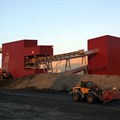
Manufacturing built repeatable production systems decades ago; the same discipline can help mines respond more consistently to operational and market pressures (Image source: © 123rf
123rf)
When mining performance moves around significantly, management also needs to ask whether the operation has the systems required to respond consistently.
The reversal comes amid rising fuel costs, cooling commodity-price support, and continued pressure on several major commodities.
Minerals Council South Africa economist André Lourens warned after the May figures that the pace of expansion had slowed consistently, suggesting that the production recovery had not been sustained.
While commodity prices, geology, input costs and infrastructure constraints all influence production, the back-to-back annual declines should also prompt mining companies to examine how consistently work is planned and executed across their operations.
What management controls
That underlying productivity gap has been building for years. Output per unit of labour and capital has been sliding since 2022 and now sits below 2015 levels.
The pressure is particularly acute underground: drilling time at the work face has contracted as depth increases, and a growing share of every shift is lost to travel before a hole is even collared. Unit labour costs are rising and employee compensation is currently outpacing inflation, adding pressure to margins even where output holds steady.
But these pressures cannot be attributed to geology or market conditions alone. How work is executed also plays an important role, and that sits squarely within what management controls.
Two mines with comparable assets, equipment and geology can still deliver very different results.
The difference often comes down to whether the operation runs on a disciplined, repeatable production system or remains dependent on the strength of whoever happens to be leading the site at the time.
Manufacturers solved this problem
Manufacturers such as Toyota, Danaher, Caterpillar and Bosch solved this problem decades ago by building production systems: standardised, disciplined and continuously improving ways of operating that hold from site to site and shift to shift.
Mining has adopted individual tools from that world, including Lean, Six Sigma and Total Productive Maintenance, but rarely the underlying system. As a result, implementation can remain fragmented, leadership-dependent and poorly embedded at the frontline.
Manufacturing's greatest strength was never the technology itself; it is a systemic operating culture, covering everything from how problems get solved to how leaders spend their time on the floor, that gets institutionalised and continuously reinforced rather than left to individual sites or shifts.
The performance gap
South Africa's mines are not under pressure because of the orebody alone.
Two operations can have the same assets, the same equipment and comparable geology, and still deliver very different results.
That performance gap often sits inside what management controls, and closing it is exactly what a production system is built to do.
The latest figures add a sharper, more immediate dimension to the argument.
May's decline followed five consecutive months of annual growth, and June brought a second consecutive year-on-year contraction, with the Minerals Council pointing to rising fuel costs, cooling gold and PGM prices, weak coal demand and persistent rail constraints as key factors, and PGMs, coal and iron ore the largest negative contributors.
But the figures also raise a management question: how effectively can individual operations absorb these pressures, recover lost production and prevent disruptions from recurring?
Manufacturing didn't get more reliable because it bought better machines; it got more reliable because it built standardised, disciplined ways of operating that hold from shift to shift and site to site.
Rio Tinto an example
Rio Tinto is an example of what this looks like in practice.
Its group-wide production system, built on standardisation, reliability, continuous improvement and data-driven operational control, has been linked to a sustained performance uplift at its most mature sites.
The lesson most relevant to South Africa is sequencing: Rio Tinto’s autonomous haulage rollout in the Pilbara reinforces the value of embedding technology in standard work and reliability discipline, rather than using technology as a substitute for them.
That production-system maturity has to build in sequence: stabilise the core first, through standard work, short-interval control, maintenance discipline and shift effectiveness, then build reliability foundations and frontline leadership through coaching, visual management and structured accountability.
Only once those foundations hold should real-time data, digital workflows and autonomous systems be layered on top, followed by embedding continuous improvement across functions rather than within them.
4 recurring reasons for failure
These efforts commonly fail for four recurring reasons:
- tools get deployed without the leadership behaviours needed to sustain them.
- Systems become over-engineered with excessive KPIs and governance layers.
- Performance losses concentrate at the handovers between mine planning, maintenance, processing and the supply chain, where functions optimise their own silo rather than the value chain.
- Leadership changes reset programmes before they take hold, eroding institutional learning.
The instinct in mining is to chase the digital layer first - dashboards and autonomous systems - before the basics are stable. That sequencing is backwards.
Technology on top of an unstable operation just gets you to the wrong answer faster.
Albert Kokota 18 Sep 2026 The operating model itself
For Africa's accelerating mining investment, building the production system in from the outset is cheaper and more reliable than retrofitting operational discipline once a mine is already running.
A production system is not a safety or efficiency programme bolted onto the side of an operation. It is the operating model itself, and it has to be owned by line leadership rather than a central improvement function.
For the wave of new mining investment coming into Africa, this is a build decision, not a retrofit decision. It is far cheaper to design the production system from day one than to bolt operating discipline onto a mine that is already running, and that is the opportunity in front of the operators investing here now.