Hepatitis C virus (HCV)-associated liver disease after liver transplantation
Hepatitis C virus (HCV)-associated liver disease continues to be the most common indication for liver transplantation (LT) in the United States accounting for nearly 50% of all liver transplants.
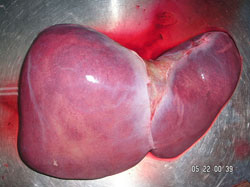
(Image: Wikimedia Commons)
Recurrence is universal in patients viremic at the time of transplantation with histological hepatitis developing in the majority of patients. Although the natural history of recurrent HCV is difficult to predict, it is widely accepted that cirrhosis from recurrent HCV occurs in up to 30% of patients within five years of transplantation.
Once cirrhosis is established, the annual risk of hepatic decompensation defined as the development of ascites, hepatic encephalopathy or variceal bleeding, is 42% [1]. These statistics highlight the importance of recurrent HCV after LT, which in turn has stimulated the controversy surrounding retransplantation of recurrent HCV, particularly in the first post-operative year when retransplantation for severe recurrence is not recommended due to poor outcomes [2]. Read on
About Professor Sandeep Mukherjee
Professor Sandeep Mukherjee, MBBCh, MPH, FRCPC is Associate Professor in Internal Medicine, University of Nebraska Medical Centre, Omaha, Nebraska.