The growing volume of weather and agricultural data available to farmers is only useful when it can be translated into practical decisions, according to agricultural experts who have highlighted the role of local trials, soil information and human expertise.

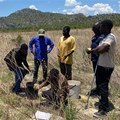
Source: Supplied
Janet Lawless, marketing manager at InteliGro and a speaker at the launch earlier this year in Stellenbosch of Pessl Instruments’ project to install 100,000 weather stations in Africa, said growers and companies had not yet unlocked the full potential of weather data.
“Data on its own does not help you reduce risk; improved decision-making helps you reduce risk. And that is the gap. A grower cannot control the weather, climate, input prices or commodity prices. What can be controlled is how decisions around these factors are made.”
According to Lawless, managing extreme climate conditions and smaller changes within those conditions requires growers to use the available tools together.
“In the data industry, we increasingly need to deliver data as credible intelligence. This includes turning access to data into a practical on-farm tool that supports decision-making, with actionable insights such as a clear indication of whether to spray or not – and why.
“But it also includes closer collaboration – there are many different input suppliers that play a role, as well as industry bodies, which are already working together but can work even more closely. When industry organisations, universities and growers work more closely together and act credibly, we can make this information available to everyone.”
Dr Ilse Trautmann, an expert in data-driven farming and a member of the advisory board of Pessl Instruments’ weather station project, said a more resilient agricultural sector starts with informed decision-making.
“We need to adapt – both within and beyond the farm gate,” says Trautmann, who, among other responsibilities, managed seven research farms in her former role as Deputy Director-General for Agricultural Research and Regulatory Services at the Western Cape Department of Agriculture.
“The ability to turn the right information into a decision at the right time is becoming increasingly important, particularly in an agricultural season in which climate uncertainty, drought and El Niño are limiting room to manoeuvre. Data alone is not enough – we also need people who can help us understand and apply it.”
The message is particularly relevant to dryland and row-crop farming, where individual management decisions can affect production and profitability.
Nine years provide a look back
Informed decision-making was one of the key messages at InteliGro’s annual Intelekt Solutions Day, attended by 201 growers during the 92nd Swartland Show in Moorreesburg. At the event, experts discussed how data, local trials and soil insights can be combined to support farm-level decision-making.
Agronomist Reinhardt Wessels, a technical marketing specialist at InteliGro, discussed results from Intelekt Solutions’ 2025 wheat trials near Moorreesburg as an example of how local research can inform production decisions.
The Moorreesburg trials were established nine years ago and are among the Western Cape’s long-term scientific field trials. In the current setup, five wheat cultivars, five fungicide programmes and an untreated control are compared across 130 blocks. The results are statistically analysed together with data from four other trial sites in the Swartland.
“What happened in the past gives us the data and lessons that we can apply in the future,” says Wessels. “The value of historical data lies in helping us look beyond the current season.”
The 2025 trials showed how different cultivars perform under local conditions. The results can help growers assess choices against their own soil and production conditions, including how cultivar selection, environmental conditions and timing of management can influence disease development and yield potential.
Septoria and brown rust were monitored, while multi-year and multi-location data help show why the same approach does not necessarily have the same effect in every season or location.
A soil sample does not always tell the whole story
Another example emerged during the Swartland Show when soil scientist Jan van Zyl, InteliGro technical marketing specialist: plant nutrition, discussed how soil conditions and local research can influence management decisions.
His discussion of chemical stratification in minimum-tillage systems showed why soil samples and an understanding of soil profiles are important. In some Swartland soils, calcium, potassium and phosphate can accumulate in the top 2.5cm. According to research, this occurs in about 30% of Swartland soils.
The implication is that a soil sample taken from 0cm to 15cm does not necessarily capture the full soil profile. Van Zyl explained how incremental sampling down to 30cm can provide a deeper understanding of soil composition and help growers make more informed decisions about tillage.
The issue is therefore not simply the amount of data available, but whether the right questions are being asked and the information interpreted correctly.
Focus on profitability, not just yield
Dr Karen Truter, InteliGro technical marketing specialist in plant nutrition, highlighted differences that can occur within a single farm at the information day.
Farm variability means an approach that produces good results in one part of a farm will not necessarily have the same effect elsewhere.
“Targeted on-farm trials can help growers determine what works under their own conditions,” says Truter, who was awarded her PhD in Agronomy earlier this year, focusing on data-driven solutions and on-farm experimentation for field crops.
“The aim is not necessarily to achieve the highest agronomic yield, but to find the best economic return. This requires a different way of thinking. The question is not only how much a crop can produce, but also what it costs to achieve that yield and what ultimately remains for the grower.”
“Call a friend”
For Lawless, this is where the human side of data-driven farming comes in.
“One cannot do everything alone. As technology and data systems become more complex, we will increasingly need people who can help interpret data and connect it to the reality on the farm.”
Daneel Rossouw 31 Aug 2026 Lawless says targeted on-farm trials change the questions growers ask of data. “Not just: What happened? but: Why did it happen, and what can I do differently next time?”
Tools do not necessarily mean a new device or application. Sometimes the most important thing is knowing who to call.
“Call a friend such as a fellow grower or another expert,” advises Trautmann.
She believes growers should be more aware of expertise already available across agriculture, including government departments, industry bodies, organised agriculture, input suppliers, consultants and other growers working with new technology.
The important question, she says, is where the information comes from and whether it is scientifically sound, verified and credible.
“There is also value in learning from others,” says Trautmann. “Successful local examples can help show how a particular tool works in practice and whether its cost makes sense. Farmers are business people. The value of any technology must ultimately be visible in the decision it helps improve, as well as in the profit for the grower.”
From data to insight
Lawless says the broader lesson emerging from trials such as those at Moorreesburg is the value of looking at information over time.
“Data can look back. It can reveal patterns that you do not notice in a single season. It can help us understand differences between fields, cultivars and management practices.”
She emphasises, however, that data only becomes valuable when it can be applied within the context of a specific farm.
“The future of data-driven farming is therefore not simply about how much data one has. It is about the ability to look back, think ahead, ask the right questions – and know when to call an expert. Because ultimately, no one farms in isolation.”
Lawless says this is also the value of InteliGro’s annual Intelekt Solutions Day at the Swartland Show:
“It is not only about the information presented, but also about the conversations that follow, the questions that producers ask and the practical knowledge they take back to the farm. The best results come when data, local research and the expertise of people who know the grower and their soil are used together.”
The central issue for growers is therefore not simply access to more data, but being able to interpret it in the context of their farm and turn it into decisions that improve production and returns.