Metallic copper surfaces kill microbes on contact, decimating their populations, according to a paper in the February 2011 issue of the journal Applied and Environmental Microbiology.
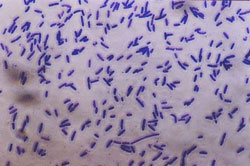
(Image: Wikimedia Commons)
They do so literally in minutes, by causing massive membrane damage after about a minute's exposure, says the study's corresponding author, Gregor Grass of the University of Nebraska, Lincoln. This is the first study to demonstrate this mechanism of bactericide.
"When microbes were exposed to copper surfaces, we observed contact killing to take place at the rate of tens to hundreds of millions of bacterial cells within minutes," says Grass. "This means that usually no live micro organisms can be recovered from copper surfaces after exposure."
Thus, such surfaces could provide a critical passive defence against pathogens in hospitals, where hospital-acquired infections are becoming increasingly common and costly, killing 50 000-100 000 Americans annually, and costing more than $8 billion, according to one estimate. Still, Grass cautions that "metallic copper surfaces will never be able to replace other hygiene-improving methods already in effect," although they "will certainly decrease the costs associated with hospital-acquired infections and curb human disease as well as save lives." However, he expects this strategy to be inexpensive, because "the effect does not wear off."
Strong evidence
Critically, the researchers provide strong evidence that genotoxicity through mutations and DNA lesions is not a cause of dry copper's antimicrobial properties. This is important, because mutations can cause cancer in animals and humans, and the lack of such mutations in bacteria from copper means that copper does not endanger humans.
The relevant experiment was particularly interesting. The bacterium, Deinococcus radiodurans, is unusually resistant to radiation damage, as its DNA repair mechanisms are especially robust. The hypothesis: if metallic copper kills by causing DNA damage, D. radiodurans should be immune to copper. It is not.
It is important to note that only dry copper surfaces are amazingly lethal to bacteria. The difference between dry and wet surfaces, such as copper pipes, is that only dry surfaces are inhospitable environments for bacterial growth. Bacteria can easily grow and reproduce in wet environments, and in so doing, they can develop resistance to copper. Resistance has not been observed to develop on dry copper surfaces.
(C. Esp-rito Santo, E.W. Lam, C.G. Elowsky, D. Quaranta, D.W. Domaille, C.J. Chang, and G. Grass, 2011. Bacterial killing by dry metallic copper surfaces. Appl. Environ. Microbiol. 77: 794-802.)