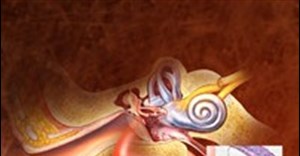
In humans, hereditary deafness is one of the most common birth defects, yet most genes involved in hearing are unidentified. Mice are used as research models because mouse and human auditory genetics are very similar.
Using a deaf mouse model generated at The Jackson Laboratory, the team identified the deafness-causing defect in the claudin-9 gene. The mutated gene fails to produce normal claudin-9 protein, which, the UI team showed, is needed to maintain the proper distribution of potassium in the inner ear.
"Genes in the claudin family number at least 24 and produce proteins that prevent ions, including potassium, from moving between cells," said senior author Botond Banfi. "Sensory cells in the hearing organ are bathed in a high potassium solution on one side and in a low potassium solution on the other side. We found that claudin-9 is very important in keeping the amount of potassium on the two sides separate. This separation protects sensory cells from potassium intoxication."
When claudin-9 is mutated, potassium floods the wrong part of the sensory cells, killing most and leaving the remaining ones functionally defective.
In follow-up efforts, Banfi and colleagues are screening people with hearing impairment to see if some of them have a mutation in claudin-9.
FINANCIAL DISCLOSURE: The study was funded in part by a grant from the National Institutes of Health and support from the UI Roy J. and Lucille A. Carver College of Medicine and the UI Gene Therapy Centre. The funders had no role in study design, data collection and analysis, decision to publish, or preparation of the manuscript.
COMPETING INTERESTS: The authors have declared that no competing interests exist.
CITATION: Nakano Y, Kim SH, Kim H-M, Sanneman JD, Zhang Y, et al. (2009) A Claudin-9-Based Ion Permeability Barrier Is Essential for Hearing. PLoS Genet 5(8): e1000610. doi:10.1371/journal.pgen.1000610
Source: Public Library of Science