 | ||
Why more South African businesses are travelling to Southeast AsiaSoutheast Asia has gradually become one of the most commercially active regions for South African businesses. Trade between South Africa and ASEAN nations has been growing steadily, driven by demand in manufacturing, technology, retail sourcing, and logistics. And as direct air connections improve and more SA companies establish a foothold in the region, the trips are following suit. 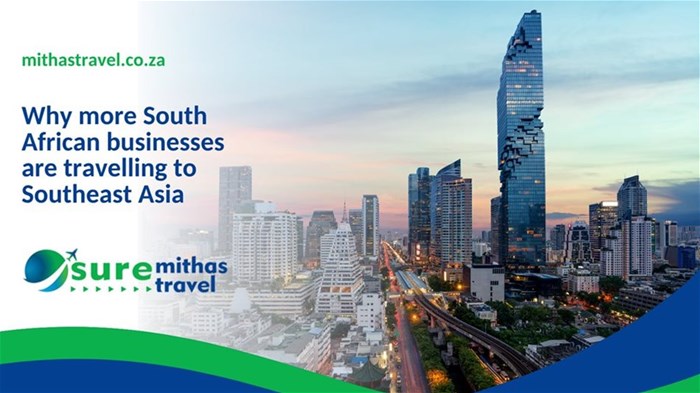 This is no longer the territory of large multinationals. Mid-sized businesses and owner-managed companies are making the journey, often for the first time, and finding that the commercial opportunity more than justifies the travel investment. For those who haven’t yet made the trip, here is what to know before you go. Singapore: the natural starting pointFor most South African businesses, Singapore is where a Southeast Asia strategy begins. It is one of the most business-friendly environments in the world, with English as the primary language of commerce, a transparent and well-regarded legal framework, and infrastructure that rivals that of any major European city. Singapore functions as the regional headquarters for hundreds of multinational companies, which makes it an efficient place to hold meetings, attend industry events, and make introductions that open doors elsewhere in the region. If you are entering Southeast Asia for the first time, starting here makes sense. From Johannesburg, the most common routing is via Dubai or Doha, with total travel times of around 13 to 15 hours. There are no direct flights between South Africa and Singapore currently, but connections are generally smooth and well-timed. A travel partner can identify routings that minimise layover time and align with your arrival schedule, so you are not landing at midnight before a morning of meetings. Accommodation in Singapore sits at the premium end of the scale compared to the rest of the region, so budgeting carefully matters. Staying in the central business district or Marina Bay area keeps transfers short and puts you close to where most commercial activity happens. Bangkok and Vietnam: the sourcing and manufacturing caseFurther into the region, Thailand and Vietnam have become significant destinations for South African companies in retail, manufacturing, and supply chain management. Bangkok is a well-connected regional hub with a large industrial base and a growing technology sector. South African buyers in the textile, consumer goods, and food manufacturing sectors have been active here for years, and the city’s commercial infrastructure, from trade showrooms to logistics providers, is well developed. Business culture in Thailand is relationship-oriented and formal in initial meetings. Titles matter, introductions should be made carefully, and patience goes a long way. Vietnam has emerged more recently as a priority destination, particularly as companies look to diversify their supply chains away from single-country dependency. Ho Chi Minh City in the south is the commercial centre, with a fast-growing manufacturing sector and a young, entrepreneurial business environment. Hanoi, in the north, is where government and regulatory relationships tend to be managed. For South African passport holders, Vietnam now offers an e-visa option that has considerably simplified entry. Both Bangkok and Ho Chi Minh City are easily accessible from Singapore, either by short-haul flight or, in some cases, by rail for those building a fuller regional itinerary. Planning a multi-city Southeast Asia trip from South AfricaOne of the most common planning mistakes South African travellers make with Southeast Asia is underestimating the time required. A trip to Singapore alone can be worthwhile, but if you are going to make the journey, the economics improve significantly when you cover two or three cities in a single itinerary. Combining Singapore, Bangkok, and Ho Chi Minh City in one trip is entirely practical and, with the right routing, not particularly exhausting. A realistic multi-city Southeast Asia trip from South Africa requires a minimum of seven to ten days to be commercially productive. That allows enough time to hold substantive meetings in each city, manage the inevitable schedule shifts, and arrive back without being completely depleted. The key, as with any multi-city itinerary, is coordinating the route as a single connected plan rather than booking each leg separately. Flights, accommodation, and ground transport need to align, and the sequencing of cities should follow a logical geographic arc rather than being driven by the cheapest available fares. Having all of this managed through one channel makes the trip significantly easier to adjust when something changes – and something usually does. For flights and accommodation across the region, Sure Mithas can coordinate the full itinerary, ensuring that each leg connects properly and that nothing falls through the gaps between bookings. What South African travellers often don’t expectEven well-travelled South Africans encounter a few surprises on their first Southeast Asia business trip. The climate is the first adjustment. Singapore, Bangkok, and Ho Chi Minh City are hot and humid year-round, and the heat is more intense than most South Africans anticipate. Scheduling outdoor transfers or walking meetings during midday hours is a mistake. Build buffer time between commitments, and factor the conditions into how you dress for meetings. The time zone difference also catches people off guard. Southeast Asia runs five to seven hours ahead of South Africa, depending on the destination and the time of year. This means early-morning calls back home, and a real need to manage energy carefully if you are also expected to be sharp in client meetings. Cash remains more relevant in Bangkok and Ho Chi Minh City than most South Africans expect, particularly for smaller transactions and tipping. Singapore operates much like home in this regard, but the further you move from the major business hubs, the more useful local currency becomes. Finally, accommodation pricing varies enormously across the region. Singapore sits at European capital-city levels. Bangkok and Ho Chi Minh City are substantially more affordable, often by a factor of two or three for equivalent quality, which can have a real impact on the overall budget of a multi-city trip. The opportunity is there – make the most of itSouth African businesses that invest in Southeast Asia early tend to build relationships that compound over time. These are markets where trust is earned in person, where deals follow familiarity, and where the companies that show up consistently earn a genuine advantage over those who rely on remote communication alone. The practical barriers to making the trip have reduced considerably. Connectivity has improved, visa processes have been simplified for South African passport holders in key markets, and the commercial case for the region has never been stronger. The planning, however, still requires care. A well-structured Southeast Asia itinerary is not something to assemble across five different booking platforms the week before departure. It rewards proper preparation, a logical route, and the kind of support that means disruptions get handled quickly rather than spiralling. For help planning your next trip to Singapore, Bangkok, or Vietnam, get in touch with Sure Mithas. From flights and accommodation to full multi-city itinerary coordination, we make sure the journey works as hard as you do.
| ||
