
 |
The doctors who trained AI are now losing patients to itSomewhere right now, a patient is typing their symptoms into an AI chatbot. The answer they received was built — word by careful word — by a physician who will never know their work was used, never see a credit, and never get paid. 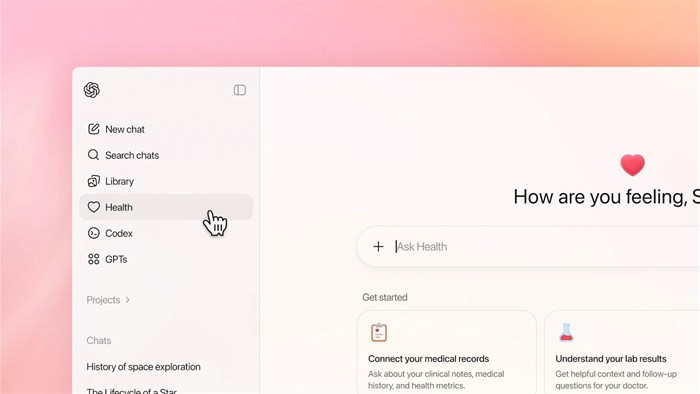 Image credit: OpenAI If you are a physician, that sentence should stop you. Because the knowledge inside that AI — the clinical reasoning, the diagnostic nuance, the treatment logic — did not emerge from a machine. It came from you. From your published papers, your case studies, and your peer-reviewed contributions built over years of practice. And yet, the industry conversation around AI in healthcare has remained almost entirely focused on patients and chatbots — on accuracy rates, safety risks, and regulatory guardrails. I believe that focus is misplaced. It overlooks the deeper structural shift happening underneath: the quiet erosion of the physician-publisher ecosystem that AI itself depends on. Losing patients to AIPhysicians spent years — in many cases, entire careers — contributing to the peer-reviewed content libraries that AI companies scraped to train their models. Clinical articles, specialist guidelines, and diagnostic protocols gave healthcare AI its medical credibility. It was not created by engineers. It was created by doctors who published in good faith, for the advancement of medicine. No one asked for permission. There were no licensing agreements, no compensation structures, and no acknowledgement that a specialist’s life’s work had become a commercial training dataset. The knowledge was taken quietly, at scale, and the physicians who produced it had no visibility into how it was being used — or that it was being used at all. And now those same models are answering clinical questions before a patient ever reaches the specialist who made answering those questions possible. That is not a technology story. That is a professional injustice.  AI before doctorsThe practical consequence is already visible. When a patient gets a clinical answer from an AI interface, the referral chain shortens — and in many cases, disappears entirely before a patient ever reaches the specialist. AI has placed itself between the patient and the physician, using the knowledge the physician provided. The industry has framed this as a question of whether AI can be trusted with clinical decisions. But that framing protects the wrong people. The more urgent question is what this means for physicians whose expertise is being systematically extracted, repackaged, and used to reduce the very consultations their careers depend on. The real crisisIn my opinion, the original crisis is not whether AI is offering the right answers. It is whether the system that offers answers — the physician-publisher ecosystem — can survive how AI is currently built. Journals and publishing networks that invested in peer review are watching audiences migrate to AI interfaces that owe them nothing. When the ecosystem becomes weak, so does the incentive for HCPs to publish, contribute, and keep the clinical knowledge base current. AI will only be unimpeachable if HCPs keep on curating informational and reliable knowledge that can be used to train these models. But in the current situation, it does not offer any recognition, compensation, or control. This cannot be considered a sustainable foundation for a technology that sells itself on the basis of clinical accuracy.  Emergency Medicine HBO’s ‘The Pitt’ nails how hospital cyberattacks create chaos, endanger patients and disrupt critical careJeffrey Tully and Christian Dameff 27 Mar 2026 The fixIf the crisis lives in the ecosystem, then the solution must come from fixing that ecosystem — not just regulating AI outputs. I do not believe the solution lies in more AI guardrails alone. The real fix is restructuring how physician knowledge is accessed, attributed, and monetised within AI systems. The fix has to be demanded by physicians themselves — through insisting on transparent licensing when their published work is used, through supporting platforms that enforce attribution and compensation, and through engaging with the AI conversation not as bystanders but as the rightful stakeholders they are. The physician-publisher ecosystem — the network of verified, peer-validated platforms where clinical knowledge lives — needs to move from defence to offence. That means building AI experiences anchored in verified physician content, within trusted environments, where proper attribution and value exchange are built into the model from the start. Where the specialist is not bypassed by the technology, but positioned at its centre. It's time to think a little more about physicians, because without them, there are no other sources for AI to produce factually correct information. That conversation is overdue. And it starts now. About the authorHarshit Jain MD is the founder and global CEO of Doceree. |