 |
SA's skills pipeline starts with access to a school deskSouth Africa's skills development conversation often focuses on preparing young people for employment, entrepreneurship and the future of work. But according to social enterprise MiDesk Global, one of the most important steps in the skills pipeline begins much earlier: ensuring every learner has access to a school desk. 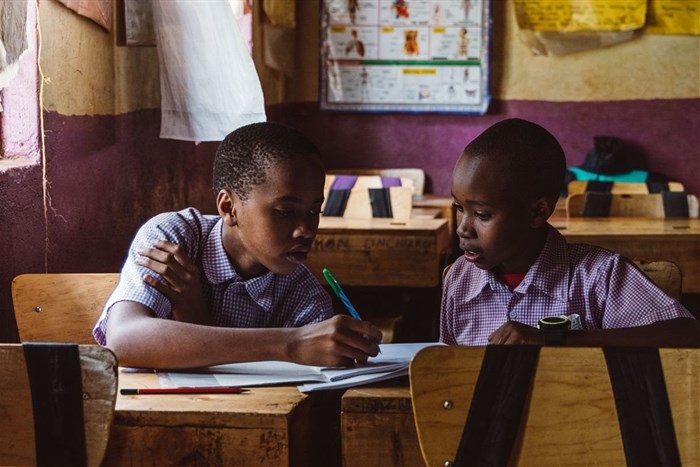 Source: ROMAN ODINTSOV via Pexels Marking World Youth Skills Day on 15 July, the organisation says an estimated 2.4 million South African learners still do not have access to a school desk, while more than 95 million children across Africa lack proper desks or chairs. Talita Boodhram, co-founder and chief impact officer at MiDesk Global, says a desk is more than classroom furniture. "A desk is a basic learning tool that not only underpins literacy, concentration, critical thinking and the skills needed for future employment but also provides an important sense of dignity to learners." "Literacy is often a hard-won achievement when school children don't have the basic tools they need to learn," says Boodhram. "Imagine having to sit on a cold, hard or muddy floor while you're balancing a book on your lap and trying to write on an uneven surface? No child should have to learn like that." Boodhram says that while developed countries are preparing young people for rapidly advancing technologies, many learners in the Global South are still struggling to access the basic conditions needed for literacy and learning. Unesco's World Youth Skills Day theme, Skills for a shared future, highlights the need for technical, digital, artificial intelligence, green, social-emotional and civic skills. Boodhram argues that those skills cannot be developed without first investing in the foundations of learning. Building the foundations for future skillsMiDesk Global says the pathway to future employment begins long before young people enter the workforce. "We have to accept that a successful career starts in the classroom, where children learn to read, write, solve problems and think critically," says Boodhram. She points to figures showing that only 30% of Grade 1 to 3 learners are reading at grade level in their home language, meaning seven out of every 10 children are falling behind during the most critical years of learning. "This early learning gap is not only an education concern, but an economic warning sign. The foundations of employability are laid long before matric, a learnership or a first interview. They are set in the early grades, when children form the confidence, habits and abilities on which every later skill depends," says Boodhram. Why classroom infrastructure mattersWith youth unemployment among South Africans aged 15 to 24 at 60.9%, Boodhram says the challenge is also about strengthening the education pipeline. "A desk is one of the earliest investments we can make in a child's future employability," says Boodhram. "You cannot build a digital economy if children have nowhere to learn to read and write. Desks create the conditions needed for acquiring literacy, confidence, concentration and critical thinking, which are the foundational skills every employer depends on." She says South Africa's skills development conversation should begin with literacy and numeracy. "Basic skills development does not start with coding classes or technical training. It starts with literacy and numeracy, and those skills are developed in classrooms equipped for learning, where every child has a desk." Boodhram says studies have linked additional years of schooling to higher GDP per capita, arguing that investment in classroom infrastructure forms part of strengthening South Africa's future workforce. "Every desk, chair and learning space contributes to the human capital our economy depends on. If South Africa is serious about building a future-ready workforce, improving productivity and driving inclusive growth, we must widen the lens on what skills readiness actually requires and invest in the foundations that get our youth to the starting line. Otherwise, today's empty desks will become tomorrow's empty CVs," concludes Boodhram. |